An afternoon with Gray Benko and Chelcie Eastman of Anything But Gray on Magnolia Network — on color, character and the courage to live fully at home
By Jenna Lachenman | More from Azalea Magazine, Photography by Dynes Media
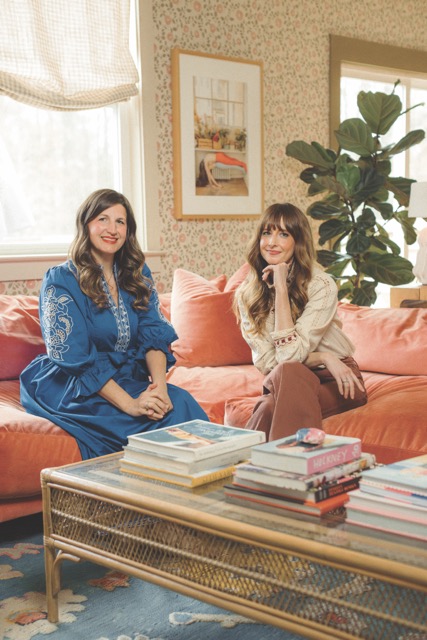
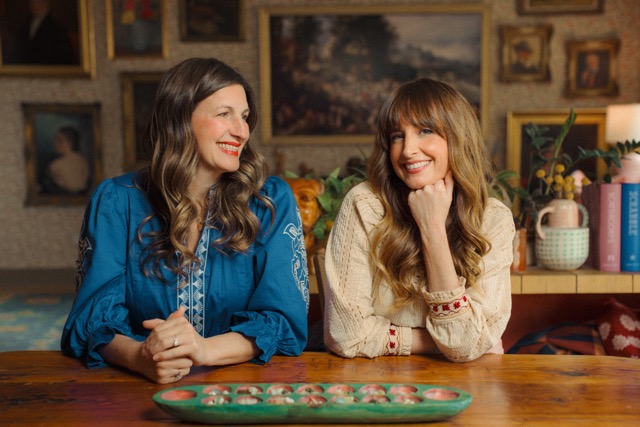
The afternoon light in Gray Benko’s living room does not rush. It lingers. Gray and her partner Chelcie Eastman star in the Anything But Gray Magnolia Network series — and Gray is seated on her now-famous pink sofa, the room around her layered but not crowded. Intentional but not staged. It feels more than just “lived in”; it feels loved and — above all — unmistakably Gray’s home.
Goose, one of Gray’s resident pups, circles once before sighing dramatically and plopping comfortably into place with us, as if to signal the beginning of something important.
Oddly enough, we are not, at first, talking about design. We are talking about artificial intelligence (isn’t everyone?). Someone had mentioned an online clip in which AI confidently miscounted the number of R’s in the word strawberry. It was funny in that slightly unsettling way that technology can be funny — when it is certain and wrong at the same time.
It was an offhand conversational thread that started before we really settled into our intended conversation, but it turned out to be something like the thesis of the afternoon. Because homes — like technology — can be generated. They can be templated. They can follow patterns and prompts and trends. But they cannot feel alive without expressing the individuality of the people who inhabit them.
How Do You Want to Feel?
When I asked Gray what typically inspires her when she begins a project, she did not mention fabric swatches or color decks or even inspiration pieces.
“I always start with one question,” she said. “How do you want to feel?”
Chelcie, seated beside her, nodded immediately.
“At the end of the day, it’s their home,” she said. “It’s not ours.”
The answer felt almost disarmingly simple. In a design era that has cycled through years of white kitchens, white walls, “coastal cookie-cutter” designs, and algorithm-approved symmetry, asking how a space should feel sounds almost radical.
Gray is known for her bold and unapologetically colorful maximalist approach to design — expressed in the name of her and Chelcie’s new show on Magnolia Network, Anything But Gray — but there’s something that runs much deeper underpinning her approach: a kind of emotional design intelligence. Color and pattern, they both agreed, are tools — but they are tools in service of emotion.
“Color and pattern can really make you feel things,” Gray said. “That’s always where I start.”
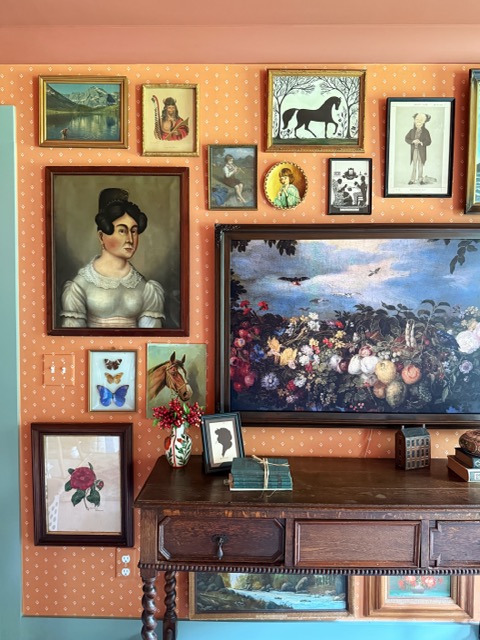
Inside the Anything But Gray Magnolia Network Philosophy on Color
Minimalism, they were quick to clarify, can be beautiful. But something subtle was lost when every home began to look like the same edited square on an Instagram grid.
“When I’m in my house,” Chelcie said, “I want to feel something.”
Gray leaned back slightly, studying the room as if seeing it anew. “Your house shouldn’t just be a style,” she said. “It should feel like you.”
It is a statement that sounds obvious until you realize how rarely we practice it. For a long time — and perhaps without meaning to — we have designed our homes for our neighbors. For resale. For what photographs well. For what feels safe.
“People always ask how to tiptoe into color,” Chelcie said with a laugh that suggested she had heard the question many times. “I say — do a cannonball!”
Gray didn’t hesitate. “If you’re going to do it, go all in,” she added. “Otherwise it won’t feel finished.”
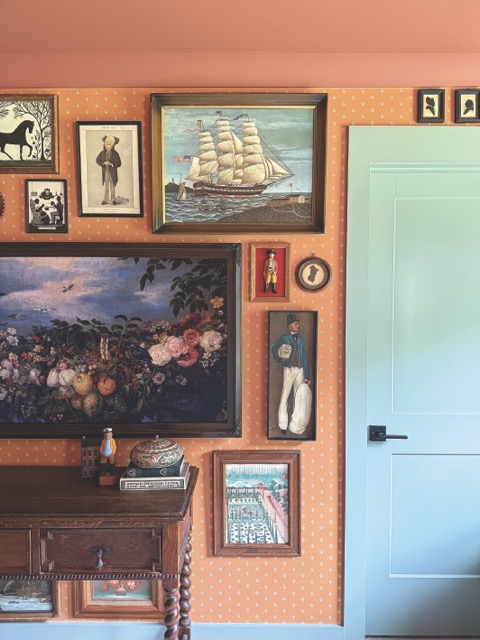
There is a particular kind of courage required to go all in — not just in paint choices, but in philosophy. To commit to a yellow kitchen. To layer antiques with modern lines. To hang art at seated eye level instead of standing height. To mix patterns without apology.
“It’s balanced,” Chelcie said, gesturing around the room. “But not matchy-matchy.”
That distinction matters. Two identical lamps flanking a sofa might be correct. But shifting one slightly — stacking books beneath it, letting the height vary — introduces tension. And tension introduces life.
Most of us, I confessed, struggle with that. We crave symmetry but resist sameness. We want cohesion but fear boredom.
“That’s the difference,” Chelcie said gently. “Balanced doesn’t mean identical.”
Embracing the Wonk in Historic Lowcountry Homes
As the conversation shifted toward older homes, Gray used a phrase that deserves to be embroidered on a pillow in every Lowcountry home:
“You have to embrace the wonk.”
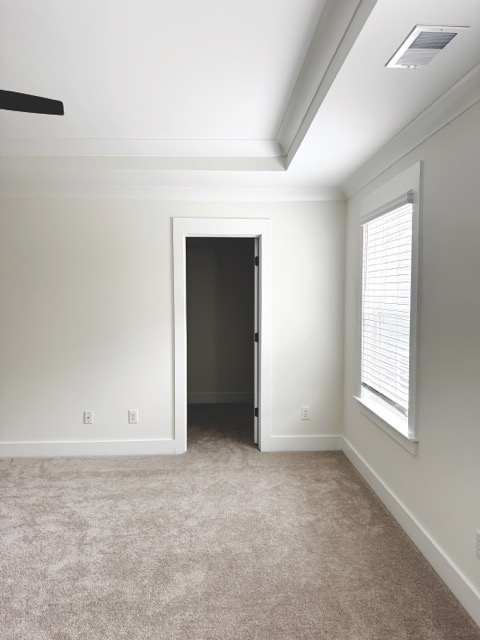
Historic houses move. They lean. They breathe. Floors slope ever so slightly. Doorways are not always square. Nothing is perfectly level.
“They’re not meant to be perfect,” she said. “They’re supposed to move. They’re supposed to breathe.”
There was a moment of recognition in that statement — not just architectural, but human. We are not perfectly level. We shift. We age. We settle. Why shouldn’t our homes do the same?
Over time, Gray explained, even contractors accustomed to straight lines and measurable precision begin to see that correcting every irregularity can strip a house of its character.
Imperfection, in the right light, becomes personality. And personality, it seems, is what both women believe we are craving again.
The Anything But Gray Magnolia Network Guide to Heirlooms and Individuality
At some point, the conversation drifted toward heirlooms — grandmother’s china, family artifacts, the quiet objects that carry stories.
Chelcie uses her grandmother’s china every day.
“Why wouldn’t I?” she asked. “If you don’t use it, what’s the point?”
Gray agreed. Homes, she said, should remind you of what is dear to you.
They spoke about grandmother’s houses — how none of them looked alike. There were no Pinterest boards then, no Instagram feeds dictating palettes, no constant comparison. Each house reflected the person who lived there — their taste, their habits, their history.
“Maybe maximalism is coming back because people are coming back to being individuals,” Chelcie suggested.
It was a thought worth sitting with.
We live in a comparison culture. We scroll through images of curated perfection and unconsciously begin to believe that there is a correct way for a house to look. But if everyone follows the same reference points, everything begins to blur.
“Our houses shouldn’t look like they were designed for our neighbors,” Gray said. It’s a sentiment that captures the spirit of Anything But Gray on Magnolia Network — homes that reflect who you are, not what’s trending.
Instead, they should reflect the people who wake up in them, cook in them, gather in them, argue and laugh and rest within their walls.
If there is a defining shift in where design is heading, they both believe it is toward feeling — toward layered spaces that hold memory and individuality. We are spending more time at home now — working from home, entertaining more intentionally, gathering in smaller, more personal ways. That shift has made us acutely aware of how a space feels.
“I think people want to feel good in their house,” Gray said. “You can only do stale for so long before it gets boring.”
“If there’s nothing unique about a house,” Chelcie said, “it’s forgettable.”
A bold kitchen. A layered living room. A front entry that makes you exhale when you step inside. These are not indulgences. They are anchors.
A Home That Is Always Evolving
Even so, Gray is quick to point out that her own home is still evolving.
“My front entry feels exactly how I want it to feel,” she said. “But I haven’t fully connected it to the next space yet.”
She described designing rooms based first on emotion — how she wanted each one to feel — and then working later to visually connect them.
“There are no mistakes,” she said. “You can connect them later.”
Chelcie, meanwhile, dreams of redesigning her laundry room — high-gloss cabinetry, better storage, thoughtful detail in a space that most people ignore.
“Interior design isn’t just about looking pretty,” she said. “It’s about making your lifestyle better.”
That may be the quiet truth underneath all of it — and the heart of what Anything But Gray on Magnolia Network celebrates. Design is not performance. It is function layered with joy.
As the afternoon light began to shift and Goose repositioned himself with another theatrical sigh, Gray offered one final reflection.
“If you chase what’s authentically you,” she said, “you get a better product.”
Then she added, almost casually, “Be weird.”
Not performative weird.
Not trendy weird.
Authentic weird.
Hang the art lower than expected.
Paint the kitchen yellow.
Use the heirloom dishes.
Stack books under one lamp.
Let the room feel like a conversation rather than a showroom.
In a world that increasingly looks the same, that may be the boldest choice of all.
And sitting there, in a living room that felt warm and textured and entirely itself, boldness didn’t feel risky. It felt like freedom.
Gray Benko is the creative force behind Gray Benko Home, the Charleston-based design studio that celebrates color, personality, and joy in every project, offering everything from quick color consultations to full-service interior design. Their philosophy — that homes should be lived in, loved and unmistakably personal — extends beyond client work to their own lines of wallpaper, fabrics and curated décor.
You may also recognize Gray and Chelcie from their Magnolia Network series Anything But Gray, where the duo brings bold, personalized transformations to homes across the Lowcountry. With signature wit and charm, they help homeowners move beyond safe design and towards spaces that truly reflect who they are.