FEATURE
Erin Carlson is making a quiet case that the best rooms aren’t decorated at all. They’re gathered — one treasure at a time.
Erin never shops with a list. No measuring tape, no fabric swatches, no plan for where a thing might go. She’ll be scrolling Facebook Marketplace long after midnight, or easing down an aisle at an antique mall, when something stops her — a shape, a patina, a frame gone beautifully dark at its corners — and that is the entire method. She buys what she loves and trusts it to find its place.
It sounds like a recipe for clutter. Then you step into her kitchen, and you understand it is something closer to a philosophy.
The house is an 1880 beauty in downtown Summerville, and Erin — the self-taught designer behind Erinteriors — has been bringing it back room by room, much of the heavy lifting done with her own hands.
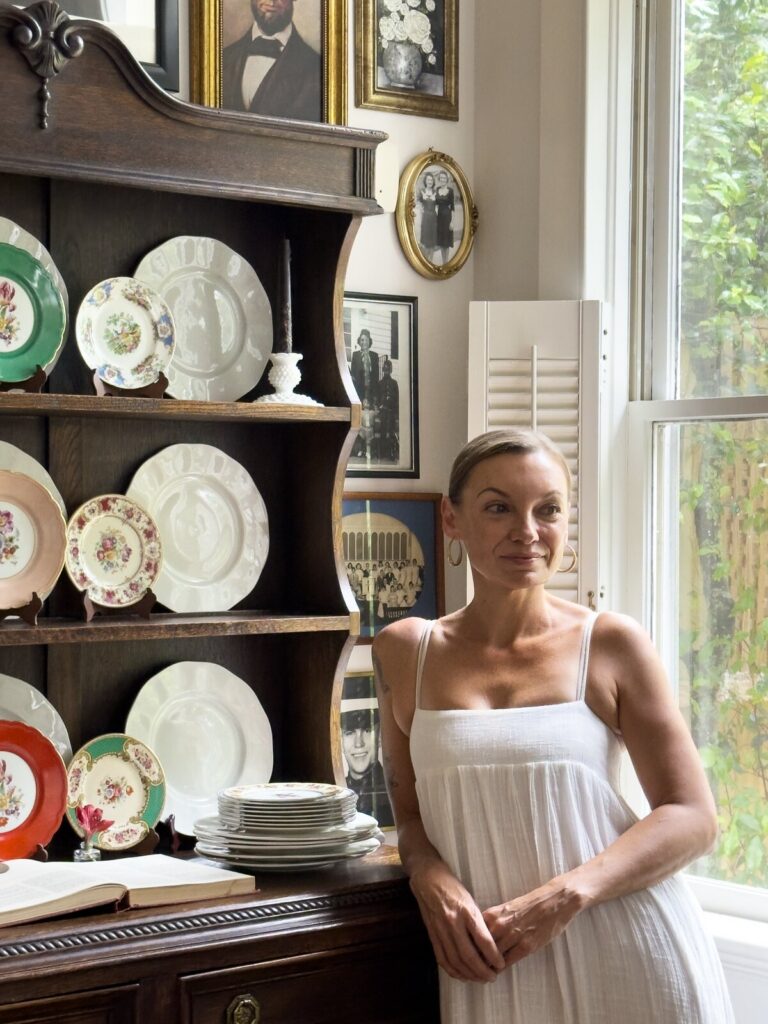
I first knocked on her door to photograph a table she’d offered to set for fall (you’ll find it in the Field Guide of the Fall issue). I stayed for the kitchen.
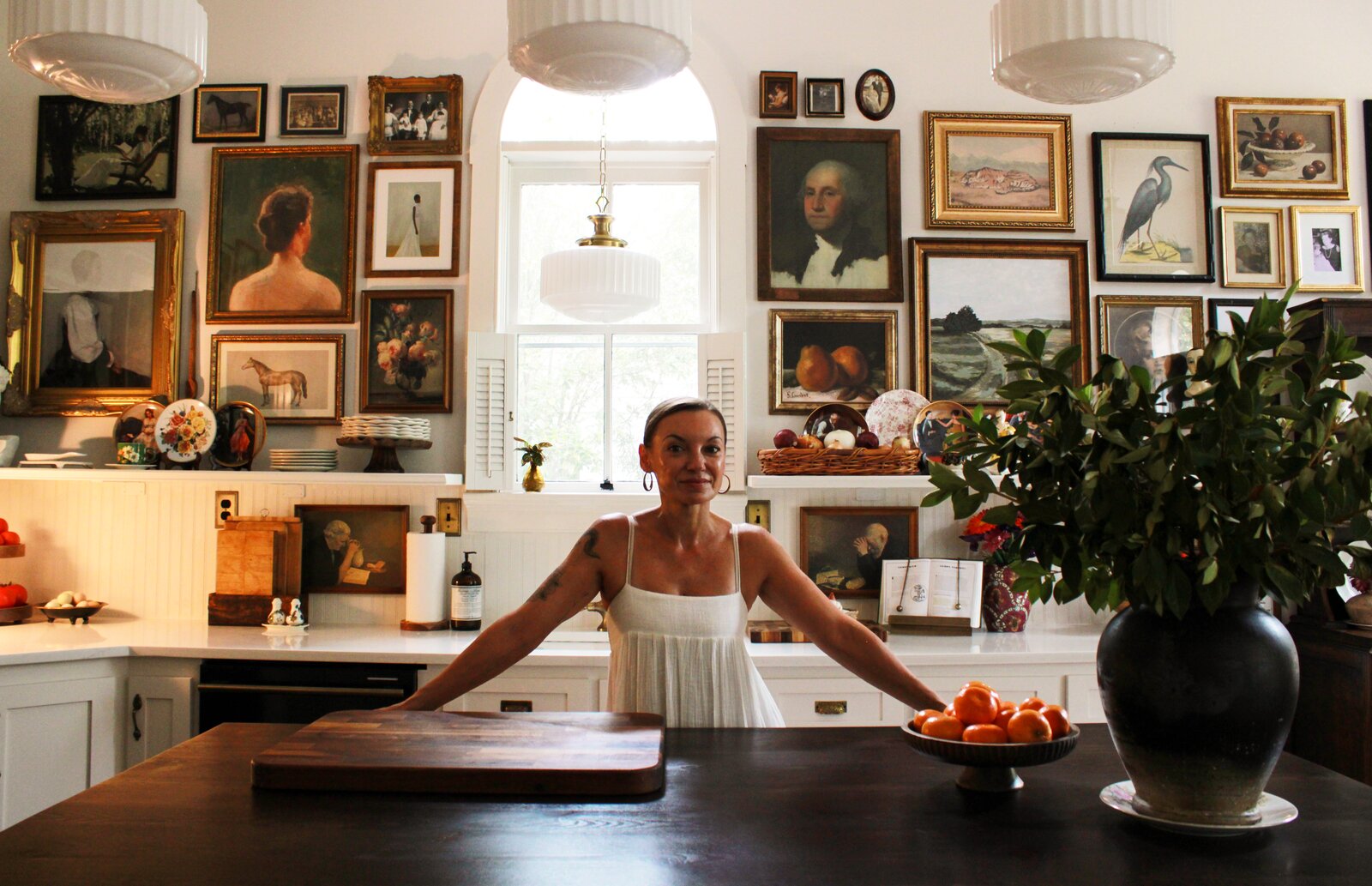
Of every room in the house, the kitchen has traveled the furthest. When Erin started, heavy modern upper cabinets crowded the walls and hid the room’s bones. So the uppers came down. The appliances moved until the room flowed the way a working kitchen should. The lower cabinets took a custom shade of off-white, and Erin stripped layer after layer of old paint from the original hardware until the brass underneath finally surfaced, bright as a struck match.
With the walls bare, the room seemed to remember what it had been for a century: the heart of the house. The fireplace reclaimed its old post as the focal point, and Erin answered it the way an 1880 cook might have dreamed of — two low, comfortable chairs pulled right up to the hearth, a corner made for a cup of coffee while supper works away on the stove.
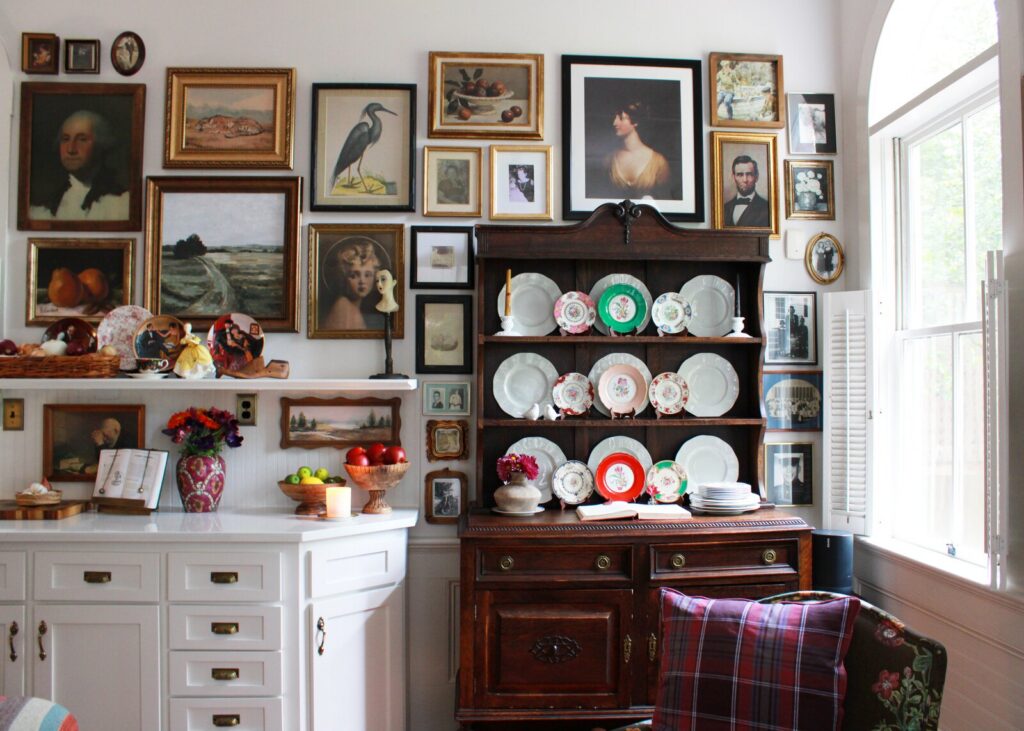
What anchors the room now is a custom island built by Vintage Mill Werks, designed to read as a standalone piece of furniture rather than fitted cabinetry — rich wood, substantial scale, craftsmanship borrowed from another era. A vintage rug lies beneath it, faded just so, proof that old rugs belong anywhere, the kitchen included. And close by stands the room’s great trophy: a long antique Welsh dresser that crossed the ocean from England years ago and was won, of all places, on Facebook Marketplace. Its shelves hold a rotating cast of dishes, art, and small treasures that changes with Erin’s mood and the season.
But it’s the walls that stop you. Gallery walls wrap the entire kitchen — oil portraits and landscapes, herons and swans, old photographs and older prints, climbing frame over frame toward the ceiling. George Washington keeps an eye on the fruit bowl. It breaks every rule of kitchen design, and it is precisely why the room feels less like a renovation than an inheritance — a space assembled over decades, even though the years of work were Erin’s own.
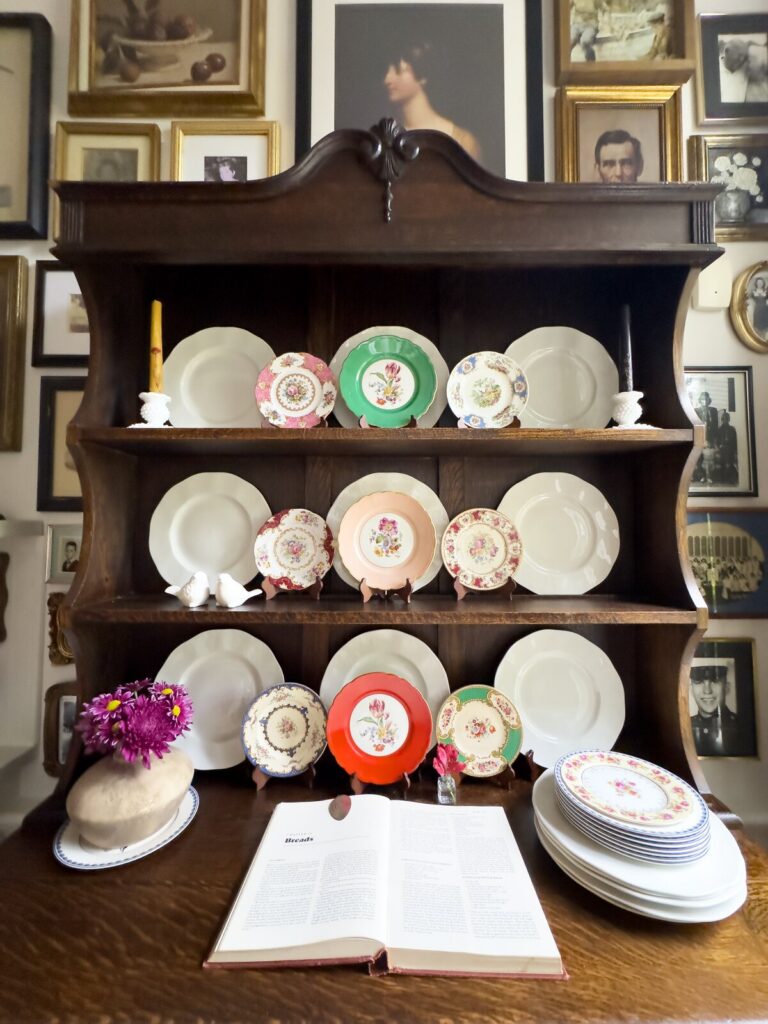
Nothing in Erin’s house arrived all at once, and none of it is finished — that’s the point. Rooms that grow slowly, she’ll tell you, are the only ones that end up telling the truth about the people who live in them. A thrifted painting, an inherited platter, a charger from a big-box store that happens to sit perfectly under great-grandmother’s china: the age of an object matters far less than its character.
The rest of us have full permission to stop waiting for the matched set. Buy the thing you love. Trust it to find its place. Gather, layer, repeat — until every corner of the house has a story to tell.
Erin’s Rules for the Gallery Wall
In her words:
Ditch the template. I never plan a layout or arrange frames on the floor first. I start with one piece I love, hang it, and build outward from there.
Mix your subjects. To get a wall that feels collected over decades, combine oil portraits, landscapes, and old prints — don’t let any one thing take over.
Let the art live with your things. A historic frame hanging beside the Welsh dresser or the everyday cookware is the whole point. That unstudied balance is what makes it feel like home instead of a museum.
Erin Carlson · Erinteriors · Summerville