The Koger-Murray-Carroll House preserves the intertwined stories of war, family, and endurance in Dorchester County.
By Phyllis Hughes, Images by Jenna Lachenman
In the late 1600s—long before Dorchester County was created—settlers pushed inland from the Carolina coast. They were drawn to land that would later become the county’s western edge, a place of pine forests, swamps, rivers and abundant game. It was wild country, but it offered everything needed for survival.
The first families cut through thick woods, drained swamps, and cleared fields. They built houses from local timber, raised livestock, and wrestled crops from the sandy soil. Life was hard, yet they endured. Over generations, they stitched together communities with faith, kinship and resilience. The same surnames that appeared on early land grants can still be found on weathered gravestones.
The Revolutionary Landscape
Though the Revolutionary War is officially remembered as lasting from April 1775 to September 1783, for this region near Charles Towne the disruption was even more intense. Many settlers were caught between opposing forces, leading to neighbor-against-neighbor violence, burned property and bitter divisions.
The destruction was lasting. Colonial Dorchester was set ablaze. St. George’s Parish Church was abandoned. Infrastructure crumbled. Families struggled with staggering losses of property and life.
In the aftermath, America was still a fragile new nation. For men returning from war, building a home meant more than shelter. It was an act of independence, a tangible step toward rebuilding a life in a newly formed country.

The Koger-Murray-Carroll House
Along Wire Road, three miles west of Grover, stands the Koger-Murray-Carroll House, or KMC House. Built in the 1780s, it is believed to be the oldest surviving residence in Dorchester County. Named for three of its prominent early owners, the house is woven into the story of the Koger, Murray and Carroll families.
The Kogers
In 1738, Josias Koger arrived from Germany through Charles Towne. Known locally as Joseph, he married Eve Lemacks and raised four children. A gifted inventor, Joseph created rice-processing machinery so valuable that the South Carolina General Assembly awarded him 500 pounds in 1755. He died around 1783.
His son, Capt. Joseph Koger (1749–1835), inherited both his father’s drive and his land. He married Mary Cook in 1777, and together they raised nine children. During the Revolutionary War, he served in the Colleton Regiment and later under Gen. Francis Marion, the “Swamp Fox.” His tombstone reads: “A Whig in 1776 and a Union Man in 1832.”
Capt. Koger’s son, Maj. Joseph Koger (1779–1852), became a planter and public servant in St. George Dorchester Parish. He served in the South Carolina House of Representatives from 1806 to 1812, fought in the War of 1812 as a captain and later a major, and held the post of Colleton County sheriff. From 1818 to 1838, he represented his district in the state Senate.
Maj. Koger married twice. His first wife, Abigail Gruber Milhous, died in 1812 and was buried near the house; her grave was recorded in the 1970s though no markers remain. Later that year, he married Mary Murray, daughter of William and Martha Murray of nearby Murray’s Crossroads. They lived in the KMC House until 1838, when Joseph, disillusioned with politics, moved the family to Mississippi and sold the property to Mary’s brother.


The Murrays
John Soule Murray (1792–1844) served St. George Dorchester in the South Carolina Senate during the 1840s. Locally, he was a trustee of Buck Springs Academy and a commissioner of free schools. He purchased the KMC House from his brother-in-law, Maj. Koger, and lived there until his death in 1844.
The Carrolls
In the mid-19th century, the property passed to James Parsons Carroll (1809–1883), a Charleston-born lawyer who rose to prominence as a chancellor of the South Carolina Court of Equity. Known for his distinguished legal opinions, he was the last surviving chancellor elected under the state’s 1790 constitution. Carroll later sold his interest to Capt. Lewis E. Parler, who became St. George’s first town clerk in 1875 and Dorchester County’s first treasurer in 1897.
By 1900, the KMC House changed hands again, eventually passing through several owners—including the Hartzog, May, Canaday and Westendorf families—before coming to the Sweatman family in 1946. In 2004, Fitzhugh Sweatman Jr. donated the house to the Dorchester County Historical Society.
Architecture and Folklore
The KMC House is a Georgian-style, two-and-a-half story clapboard home built of black cypress, with Federal-era details such as carved mantels. Family histories suggest it took seven years to complete; the date “1791” is said to be inscribed on the chimney.
The dining room still bears hand-painted wainscoting designed to mimic oak. Parlors are wide and gracious, in keeping with Charleston styles of the era. Handmade nails and hinges remain throughout. During restoration, a wall was left exposed, revealing horsehair plaster sealed over hand-cut lathes. The three-story staircase narrows as it ascends, and in the attic, hand-hewn beams notched and pegged together still bear Roman numerals from the original assembly.

Folklore surrounds the property. One story tells of a traveler stabbed while staying there when it was used as a boardinghouse. He bled to death on the bedroom floor, and according to legend, the outline of his body still stains the wood despite centuries of attempts to remove it.
In 1974, the house was listed on the National Register of Historic Places as the “Old Carroll Place.” In 2002, it appeared on South Carolina’s Most Endangered List. A major restoration was completed in 2009, but research continues into its earliest history.
A Rare Opportunity
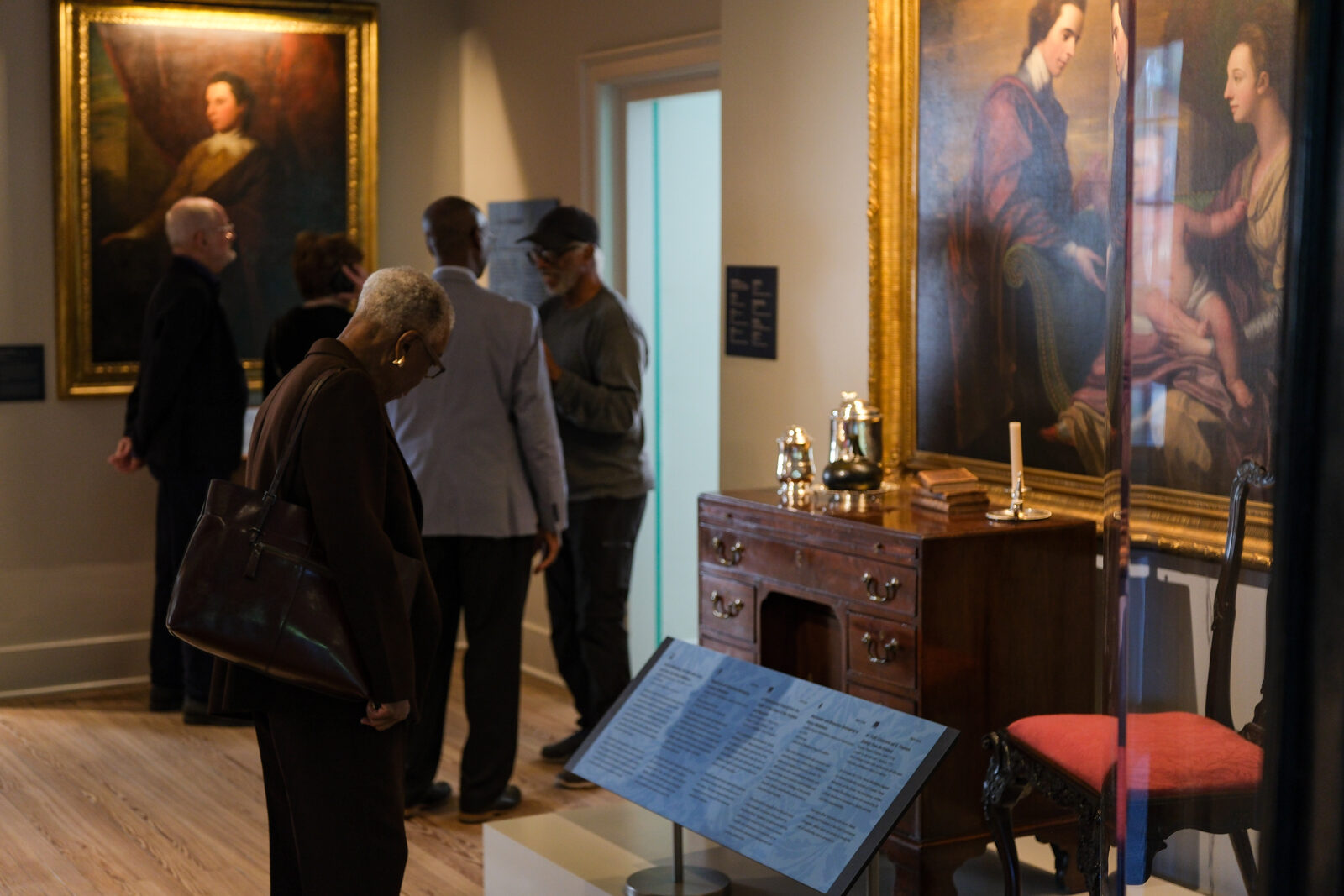
On Oct. 11, 2025, the Koger-Murray-Carroll House will open its doors to the public from 10 a.m. to 5 p.m. as part of Dorchester County’s commemoration of the 250th anniversary of the Declaration of Independence. Visitors will be able to walk through the rooms, hear presentations from local historians, and imagine the lives of those who built, defended and preserved this home.
Presenters include:
Ron McCall is a local historian who studies General Nathanael Greene and his Southern Campaign in the South Carolina lowcountry during the Revolutionary War. He will provide a presentation on Edisto/Ferguson’s Mills in existence 1767-1796. The “Mills” played a significant role during the Revolutionary War. It was at this spot that Continental troops under the command of Major General Nathanael Greene’s army crossed the Edisto River in 1781. The Mill Dam was so robust that wagons could cross the river at this point.
Carin Bloom is a public historian with over 20 years of experience researching and sharing the stories of the past. She holds an Honors BA, two MAs, and a PhD ABD in Anthropology, all with specializations in Historical Archaeology of the American Revolution. Carin will portray Catharine “Caty” Littlefield Greene, wife of Major General Nathanael General who commanded the Continental Army. Toward the end of the American War of Independence, Catharine takes one more trip to accompany her husband to the front lines of war. Despite his best efforts to forewarn her, General Greene is unsuccessful in preparing her for the desolation and destruction she will see–the worst yet–as the war comes to it conclusion.
Jack Smith became the first Poet Laureate of Dorchester County in 2000. Over the past 25 years, Mr. Smith has performed all over the country in such places as the US Naval Academy, Disneyland and Disneyworld, the International Storyteller Center in Jonesborough, Tennessee, North Charleston Arts Festival, and many other prominent venues. He wrote and produced a play in which he performed in the inland lowcountry and for the inmates inside the Turbeville Correctional Institute. He has written three books, two novels, and has entered and won numerous poetry competitions. Jack will convey the story and history of the KMC through video.