How the Bradford watermelon is making a comeback—and why it matters for all of us
There is a moment, Nat Bradford says, when you crack open a Bradford watermelon and the room fills with something you weren’t expecting. Not just sweetness — fragrance. A floral, almost intoxicating scent that stops people mid-conversation. It’s the kind of thing modern agriculture has quietly bred out of our produce in favor of thicker rinds and longer shelf life, the kind of thing most of us have forgotten food could do.
“If you think of it as keys on a piano,” Bradford says, “the modern hybrids are missing twenty keys. These older varieties — you have all the keys there, and each one is some other little note, some other little flavor, some other little nuance. If you get the whole symphony, it’s transcendent.”
He is not exaggerating. People in their nineties have come to his Sumter, South Carolina farm, taken a bite of the Bradford watermelon, and got tears in their eyes because they hadn’t tasted anything like it since childhood.
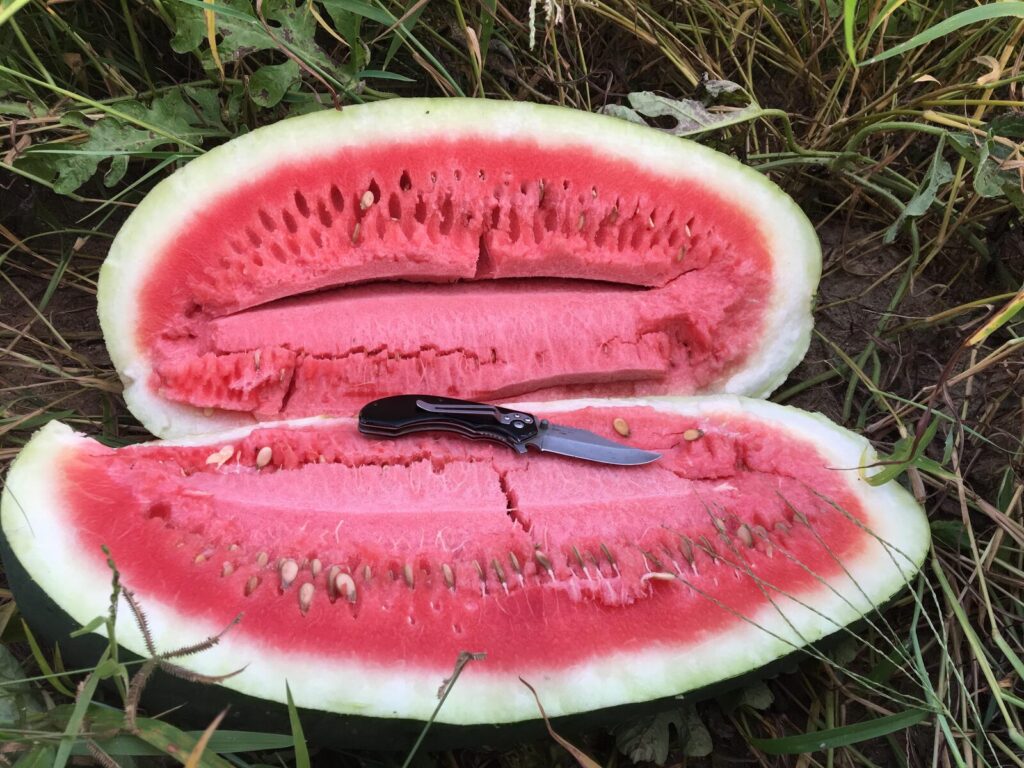
The Bradford watermelon is not a new discovery. It is, in fact, one of the oldest documented watermelon varieties in the American South, first recorded under the Bradford name in an agricultural journal in 1854. Food historian David Shields traces its likely origins to a cross between the Lawson watermelon — a variety dating to the 1700s — and the mountain sweet, two of the few named cultivars available in the antebellum Lowcountry. By the late nineteenth century, the Bradford had become the most coveted watermelon in the Southeast, prized for a complexity of flavor that set it apart from everything else in the field.
Then, like so many heirloom varieties, it disappeared — or seemed to. While the rest of the agricultural world moved toward hybrids engineered for uniformity, disease resistance, and the ability to survive a cross-country truck ride without bruising, the Bradford watermelon quietly endured in one family’s backyard plots, passed down through generations not as a commercial crop but as a kind of living inheritance.
Nat Bradford’s great-great-great-great-grandfather was the plantsman who first developed the variety, selecting and breeding with a sophistication that was rare for his era. “Back then, we didn’t completely understand pollination, how to keep things from crossing,” Bradford explains. “I think that’s probably the most unique thing about our family watermelon — that he was able to not just grow a crop and save the seeds, but to select and breed it and develop it into what it became.”
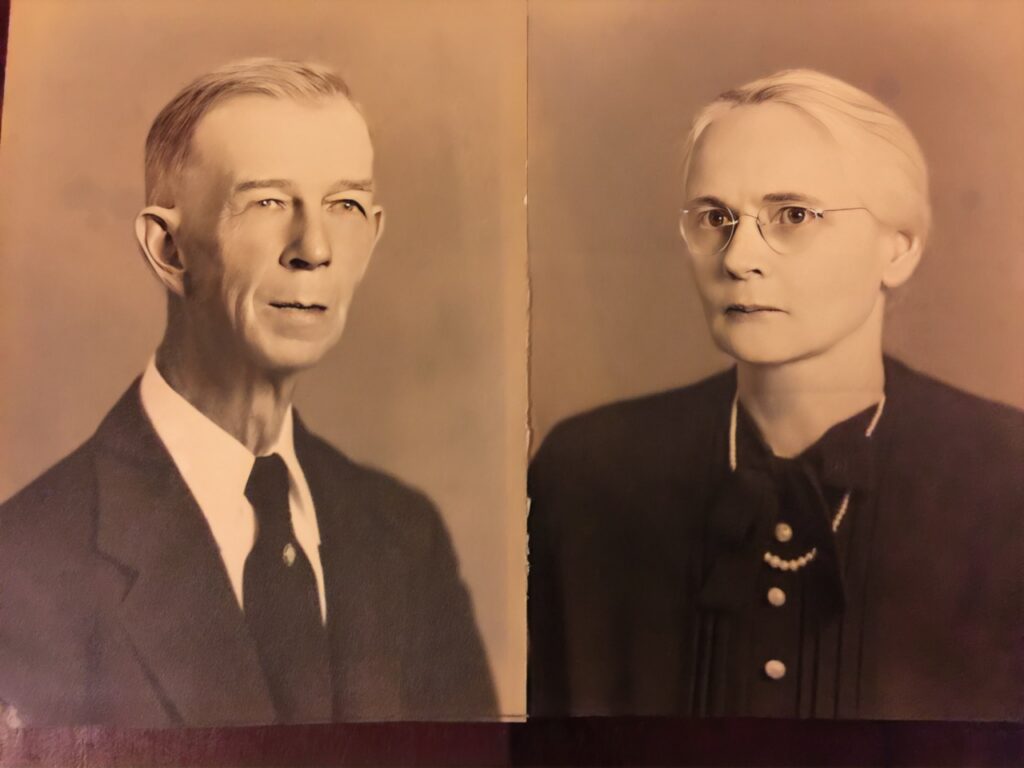
That knowledge — intuitive, patient, deeply particular — moved down the family line like the seeds themselves. Bradford’s grandfather farmed. His father’s generation was the first that didn’t. But his father still grew a small patch of Bradfords every year, just enough to save the seeds, to keep the thread from breaking. And Nat, even as a boy, was the one who reached for it.
“I was growing our watermelons since I was five,” he says. “Nobody tried to twist my arm. All my other friends were into sports — I did that too — but I didn’t have any friends who would stay in their room and draft their garden plans in the afternoon.”
He describes it as something closer to instinct than choice. A pull toward plants that he can’t fully explain, except to say that it runs in the blood. He pursued a career as a landscape architect — a practical concession to the reality that passion alone doesn’t pay the bills — but the seeds were always there, waiting.
The turning point came in 2012, when Bradford stumbled across a website called American Heritage Vegetables, run by Shields, a professor at the University of South Carolina. On the site, Shields had written that if there was one watermelon he could bring back from extinction, it would be the Bradford.
“I just knew it had to be our watermelon,” Bradford recalls. He reached out with the family history, the location, the anecdotal evidence he’d gathered over years. Shields responded the same day. He had the family names. He had the records. The watermelon Bradford’s family had been quietly tending for over a century was the very one historians assumed was lost.
“To have a watermelon that kind of went under the radar for over a century just show back up intact — and still being maintained by the family that bred it — that’s kind of unheard of,” Bradford says.
It took another three years to make the leap. Bradford wound down his landscape business, moved back to Sumter, and in 2015, established Bradford Farm with his wife, Bette. By late 2018, the operation was profitable.
The farm today spans about twenty-five acres, though it punches well above its weight. Bradford grows not only the family watermelon but also heirloom okra and collards that trace back through his grandfather’s garden, along with a growing roster of endangered Southeastern varieties sourced from other seed-saving families. The mission has expanded beyond the Bradford name: it is now about rescuing an entire category of food that the modern agricultural system has little incentive to preserve.
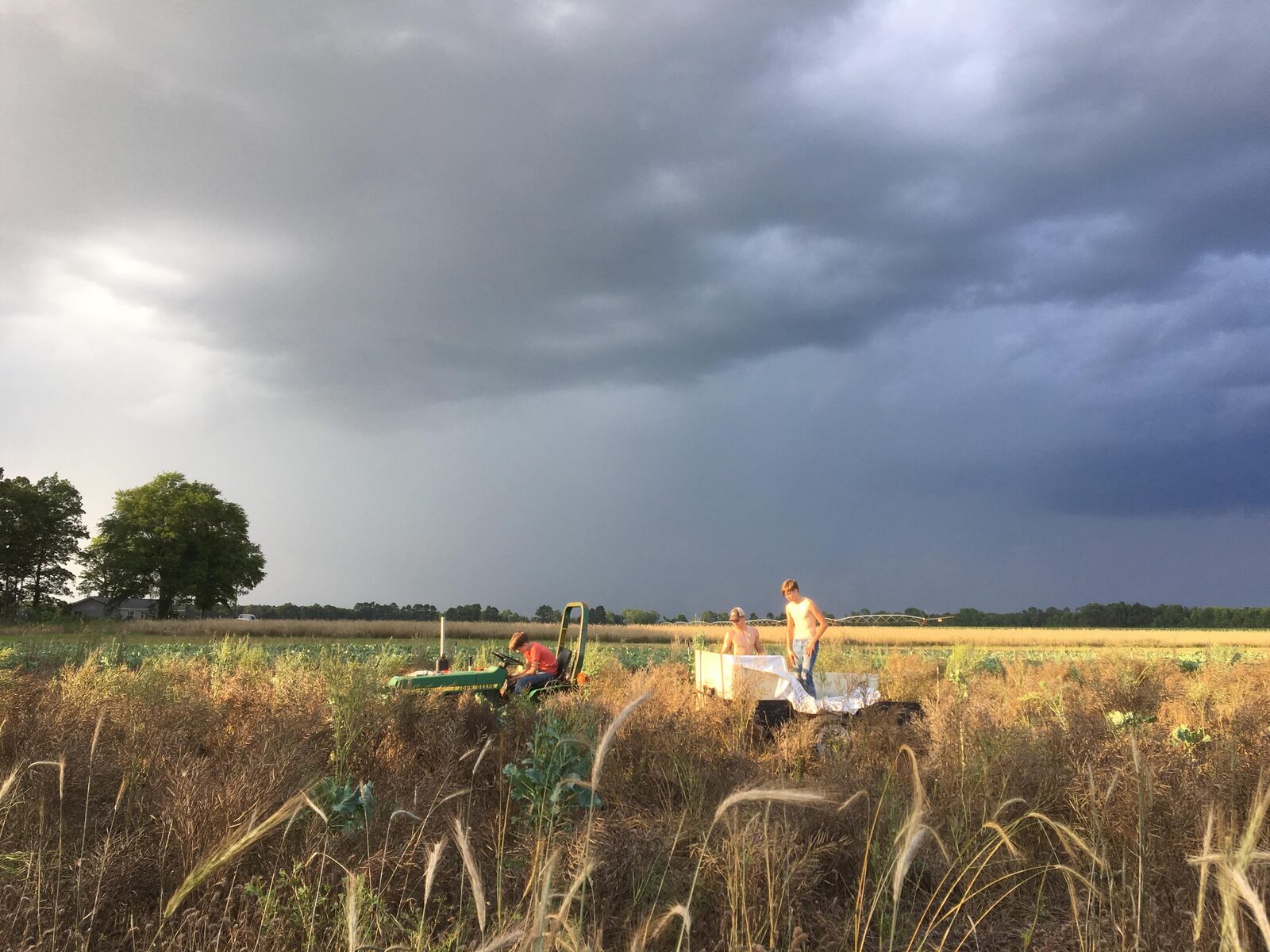
“There are so many great old varieties at the brink of extinction,” Bradford says. “If some effort’s not put into preserving them — beyond just saving seeds and putting them in your freezer — that’s the bare minimum. If you really want to save something, you’ve got to grow it and consume it. Get it scalable, get folks aware of it, share the stories behind it.”
This is the work that doesn’t make the brochure. Bradford runs his own fleet of delivery vehicles, hauling produce to chefs and restaurants from Nashville to Savannah to Raleigh. He partners with smaller farmers who lack delivery infrastructure, moving their crops far beyond the farm stand and giving them a viable income base. It is expensive, logistically grueling, and entirely by design — because controlling the supply chain means controlling the price, which is the one advantage a small heirloom grower has over the commodity market.
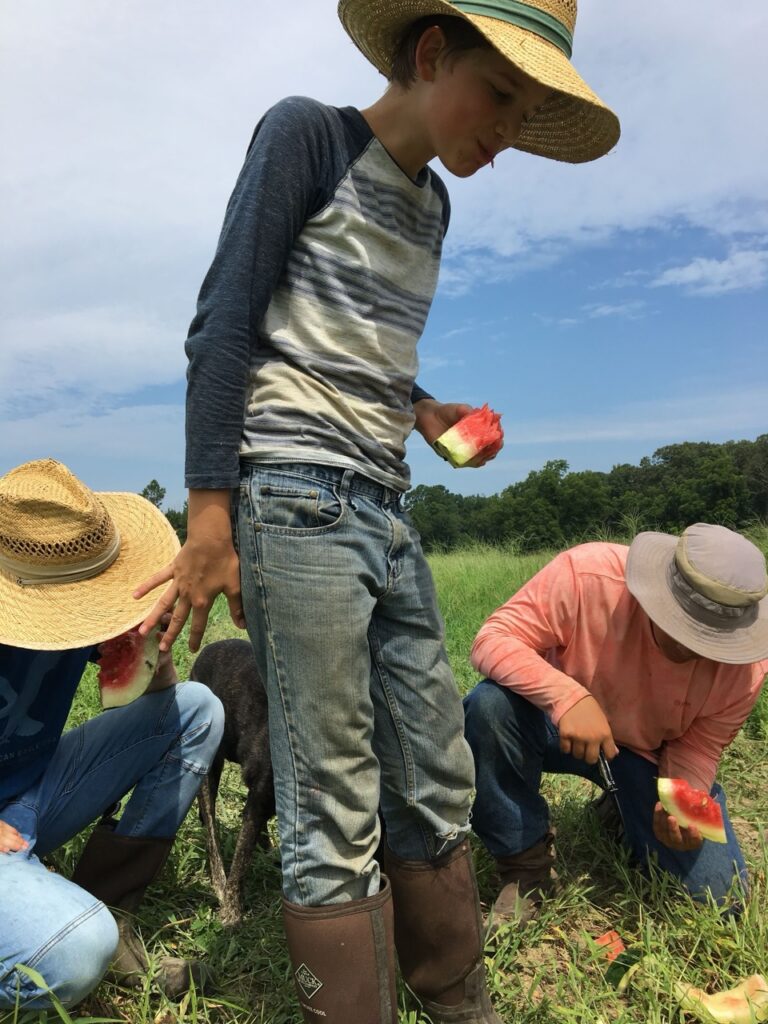
“We can’t insulate ourselves completely,” he admits. Diesel costs are brutal. Poultry manure prices — his preferred fertilizer — rose for the first time in twelve years. And unlike conventional row-crop farmers, heirloom growers face a system that was never built for them: universities don’t fund research on preserving old varieties, insurance companies won’t cover crops known to be disease-susceptible, and seed companies would rather sell treated, standardized product than support the complications of biodiversity.
“They would rather just sell their hard cardboard, red tomatoes to everybody,” Bradford says, without bitterness but with clarity. “The stuff that we grow is just not easy to scale up.”
Then came the crisis that nearly ended everything.
A few years ago, Bradford noticed a decline in his watermelons — a lack of vigor, irregular shapes, skin abnormalities. Clemson University researchers came out twice to test for modern viruses and diseases. They found nothing. The problem, specialists told him, was likely genetic: the slow, inevitable consequence of maintaining a pure breed line without introducing new genetics. Inbreeding, in essence. It happens in all living things, but watermelons, researchers say, are particularly susceptible.
It had happened before. Bradford’s grandfather told him that his own father had faced the same thing — a period when the genetics seemed to be “running out.” He’d had to start over then, too.
“It didn’t matter whether it was genetic or not,” Bradford says. “If it was genetic, I was going to have to start over anyway.”
And so he did. The family selected seeds from only the top two percent of their crop — the very best fruit, the most perfect expressions of what the Bradford watermelon should be — and began again. They also changed their long-term strategy: instead of saving seeds annually, they would do one major seed crop every five to seven years, stretching the genetic timeline and, they hope, pushing the next period of decline out by centuries rather than decades.
At the time of our conversation, Bradford had just finished planting the new crop, the first real test of whether the recovery would hold. “We literally just finished planting a couple of weeks ago,” he said. If all goes well, the first melons will reach restaurant kitchens by late June or early July.
“I’m not ready to ring that bell yet,” he says of wider public availability. The chefs come first. But the implication is clear: if this season succeeds, the Bradford watermelon — the one David Shields once mourned as extinct — will be back.
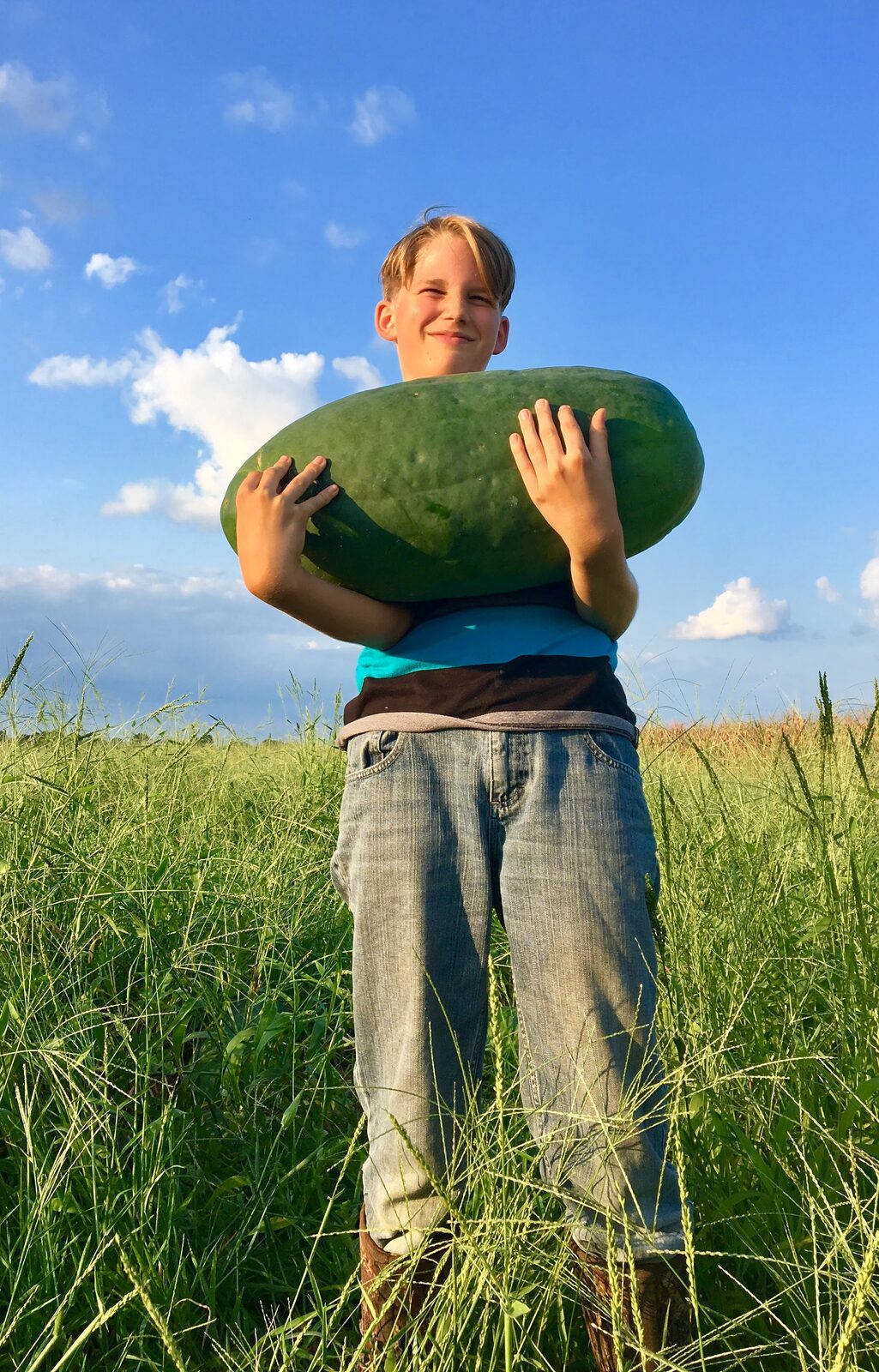
What makes the Bradford worth saving extends beyond nostalgia, though nostalgia is part of it. The watermelon itself is a sensory argument for everything the modern food system has traded away. It is solid dark green and oblong — people say it looks like a giant cucumber. The flesh is tender and succulent, never crunchy, because it was never bred for shipping. The rind is edible raw, needing nothing more than a little sea salt and a squeeze of lime. And the flavor is layered in a way that defies the sugar-content obsession of commercial breeding.
“Where folks get stuck on sugar content — well, if that’s the only thing you’re selecting for, you’re missing out on everything else,” Bradford says. The Bradford offers something richer: a watermelon that is an experience, not just a snack.
But the deeper argument is about nutrition, adaptation, and resilience. A variety that has grown in the same region for nearly two centuries has adapted to its soil, its climate, its particular ecology. It is, in a sense, an expression of place — more nutrient-dense, more flavorful, more robust than a variety shipped in from a different latitude and kept alive on artificial inputs.
Bradford puts it in musical terms: “You can have the best song ever written, but if you give it to a high school band instead of your favorite musicians, there’s nothing wrong with the music. It was the execution.” The best genetics, grown in adapted soil, with organic-minded practices — that’s the full performance.
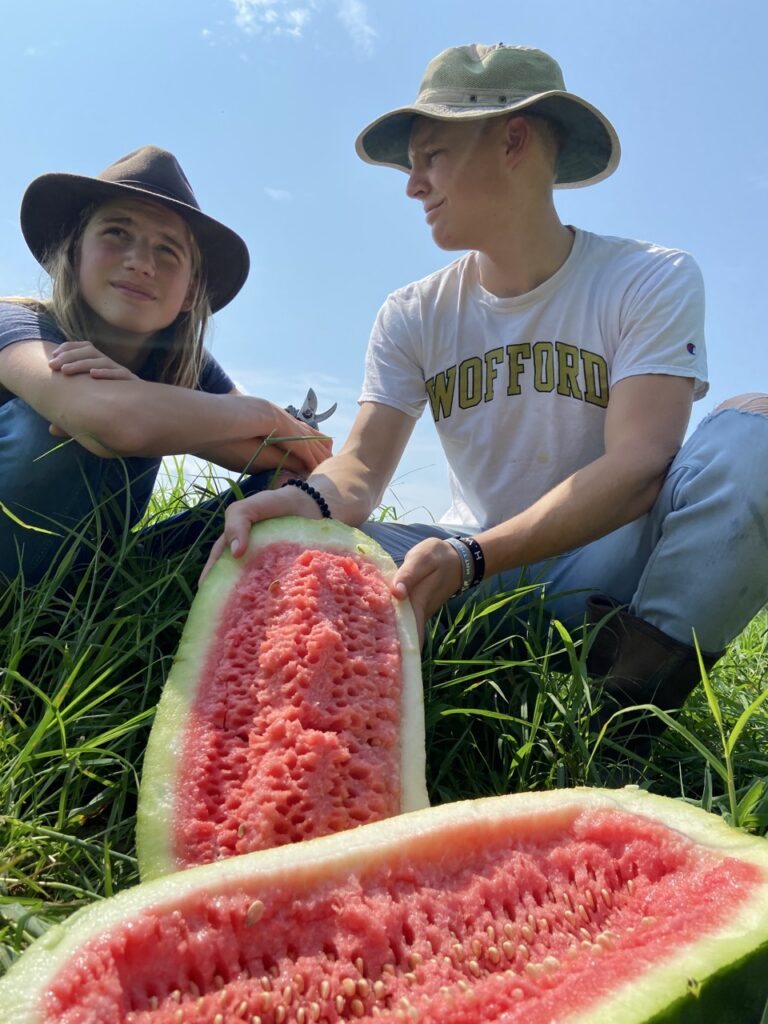
The future of Bradford Farm looks, for the first time in years, genuinely bright. Three of Nat and Bette’s five children are either working the farm or planning to. Their eldest has been full-time for two years. Their second son joined after serving in the Air Force. Their fourth, Aiden, a high school junior, has declared his intention to stay. Only their third, a marine biology student at the College of Charleston, and Natalie, thirteen and still figuring it out, seem bound for different paths.
“If we’ve done anything,” Bradford says, “getting a few of them to carry it on — that’s the biggest thing for me.”
He is already expanding the operation to make room for the next generation to raise families of their own. The Bradford watermelon, after all, has survived this long not because of any institution or corporation, but because one family kept choosing it — kept planting it, kept saving the seeds, kept believing that something this good was worth the trouble of keeping alive. The rest of us just have to show up and eat it.