SUMMERVILLE HISTORY & PRESERVATION
On any given evening, people gather in downtown Summerville to share a meal, listen to live music, or linger over drinks with friends inside buildings whose histories often go unnoticed. Elsewhere in the historic district, drivers pass old homes shaded by oaks and magnolias without realizing how little is actually known about many of them. The buildings are familiar. Their stories, largely, are not.
Of the roughly 700 buildings constructed in Summerville between 1800 and 1950, the majority have never appeared in a book, newspaper, or magazine article. Despite the town’s rich architectural heritage, the documentary record surrounding its built environment remains surprisingly thin.
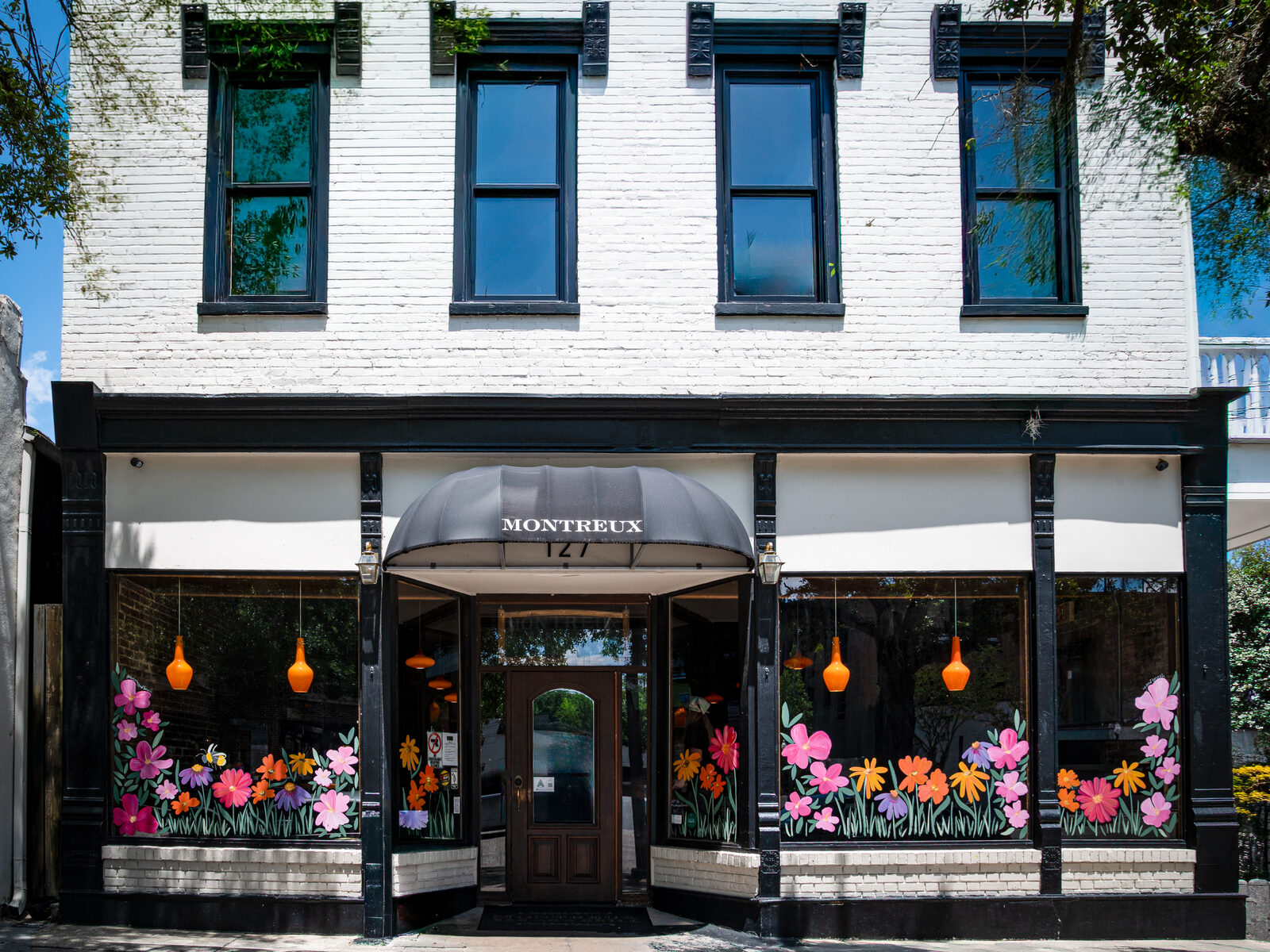
Take the building at 127 W. Richardson Avenue. Today, it houses Montreux Bar & Grill, which has occupied the space since roughly 2008. Before that, the building served briefly as McGuire’s Irish Pub. In 1983, it housed a NAPA Auto Parts store. Earlier references identify it as the Central Cafe.
The structure appears on the 1895 Sanborn Fire Insurance Map, standing mid-block on what was then West 1st South Street, now West Richardson Avenue. At that time, it was a wood-frame dwelling with a full-length porch stretching along its facade. The same structure appears consistently on subsequent Sanborn maps through 1928, the final year the maps were produced for Summerville.
Today’s building tells a more complicated story. Now constructed of brick and nearly twice the width shown on the early maps, the structure still retains its distinctive two-story wooden porch. Elegant George L. Mesker cast-iron facade elements add another layer of architectural intrigue — though that story deserves its own telling.
Was the original wood-frame house demolished and replaced with the wider brick structure seen today? Or was the original dwelling expanded and later encased in brick while preserving the porch? And who lived there during those early decades before the building became woven into the commercial life of downtown Summerville?
The Richardson Avenue building is just one of hundreds with unanswered questions. Beyond deed research, Sanborn Fire Insurance Maps, historic surveys and a handful of published works, much of the history tied to the buildings of historic downtown Summerville remains elusive — but that’s about to change.
Retired architect and architectural historian Mike Streckert has spent the past two years cataloguing and documenting Summerville’s built history — nearly 700 buildings dating from 1800 to 1950. Not simply buildings. Stories in architectural form. The result will be a comprehensive book, slated for release in December 2027 to coincide with the 180th anniversary of the founding of Summerville, published by Summerville-based Joggling Board Press.
And the story of how the book came to be is, itself, one of those distinctly Summerville tales — a thread of serendipity connecting a retired architect, an independent publisher and three women who, nearly fifty years ago, sensed that their town was changing and set out to gather its stories before they disappeared.
1979 — The Porch Rocker Ladies
Peggy Scott Kwist and Ginga Cuthbert Wilder are both fourth-generation Summervillians. As young women and good friends, they had a question that nagged at them: how does a town grow without losing the stories that make people love it in the first place?
At the time, the population of Summerville was only about 6,000, and they wanted to capture the spirit of the town they knew. “Ginga and I had a conversation. We realized change was on the horizon,” Peggy recalled. “We knew the characters of the town and most of them knew us. And if they didn’t, they knew our people.”
“They trusted us,” Ginga interjected. The idea of a book began to hatch.
Just down the street, a new neighbor had moved in. Eleanor Brownlee Koets, raised in Greenville, found her way to Summerville in 1974. In 1979, she moved into a cottage near Ginga’s home. Eleanor was a professional photographer. Ginga and Peggy invited her to join them.
“I love stories,” Eleanor said, recalling her own joy of listening to grandparents tell their stories.
The team was now assembled. Ginga, the great list-maker, was the researcher. Peggy, with a knack for the literary, was the writer. And Eleanor was the intrepid photographer.
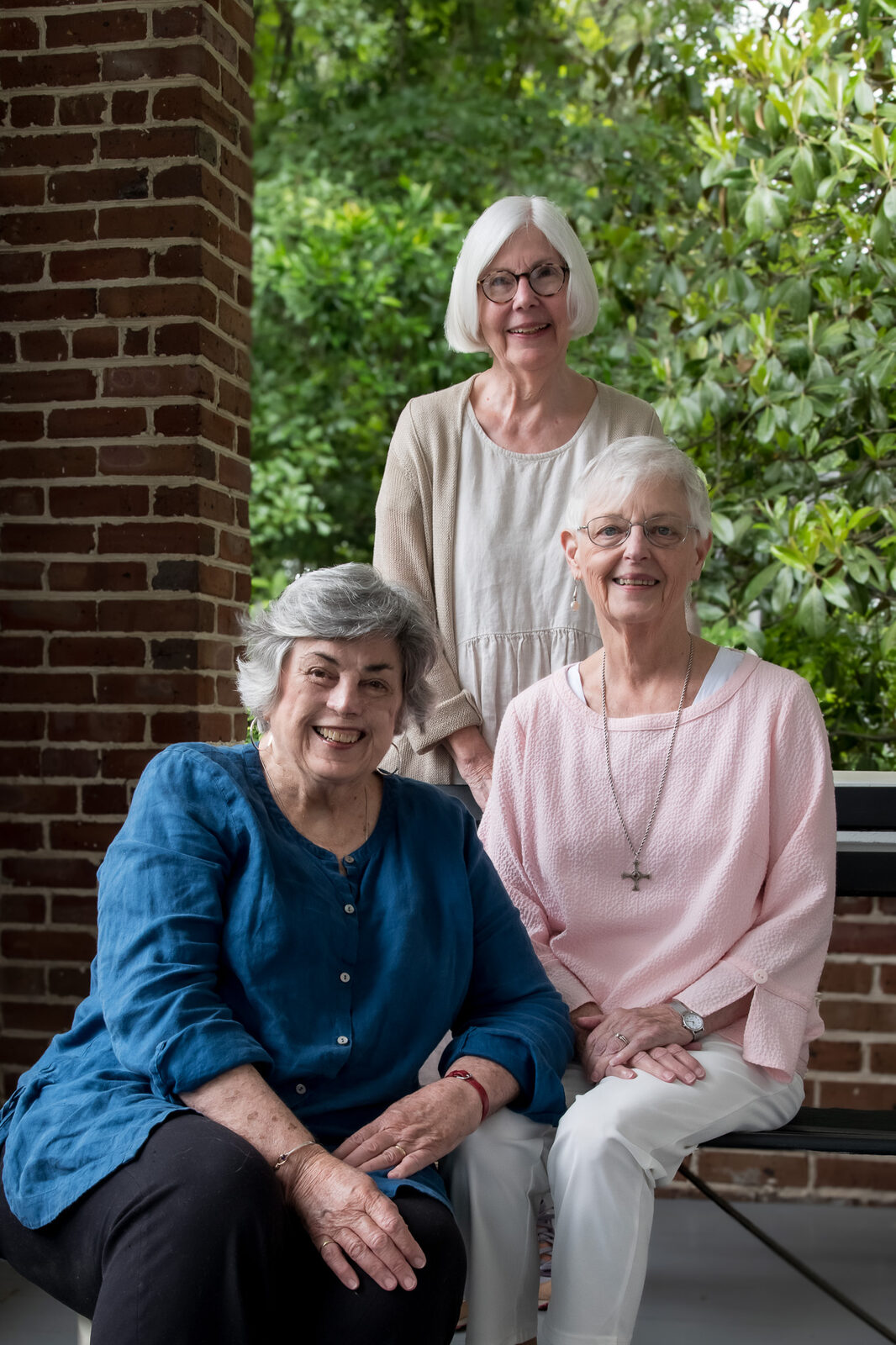
Soon, the three friends were in motion, visiting the people behind the stories. “That was so much fun!” Ginga said. She related one visit of an elderly neighbor who served her tea and chicken salad sandwiches then headed to her bedroom declaring that her stash of photos was all under her bed. “I loved it!”
In 1979 when all this was happening, there was no internet, no database. “We had my dining room table,” Ginga said. “And my lists.”
When Eleanor wanted to get a picture of town square, she climbed out of the window of the cupola atop Town Hall and set her heavy tripod on the ridge of the roof, balanced herself and took the picture. “My childhood tree-climbing skills came to the fore!” she said.
They gathered every day that summer at the Wilder home. Peggy’s daughter Mary was 9 at the time. “We called it The Year of the Book,” Mary said. “While our moms worked on the book, we were free to supervise ourselves.” The Wilder kids were 10, 7 and 5. Mary’s brother was 4. Pillow forts and lots of imagining, play-acting and silliness took place while their moms worked down the hall. “We laughed so much,” Mary said.
When it came time to pull everything together, the three women laid out the book on Ginga’s dining room table, literally cutting and pasting the words and photos. “We really went out on a limb to get it published,” Eleanor said. “Each of us put in $3,300, which was an enormous sum at the time.”
But it paid off. The book has been reprinted three times — a total of 7,000 copies.
“As three neophytes to creating and publishing a book, we learned awkwardly from our inexperience, but we still marvel at the final wonderful result that contributed something of value to the community,” Eleanor reflected. “We learned so much and had marvelous fun doing so. It certainly conveys our deep appreciation and love for this town of Summerville that we get to call home.”
The book they created — Porch Rocker Recollections of Summerville, South Carolina — would go on to shape lives in ways the three women could never have imagined. Including the life of a young family in Ohio, searching for a place to call home.
1996 — A Forever Move
In 1996, Susan Kammeraad-Campbell and her husband — a political science professor seeking a department chairmanship — decided to leave the small college town in Ohio where their three daughters were born and stretch their wings.
The options were few, and their nine-year-old, Abby, had a non-negotiable—with hands planted firmly on her hips, she delivered the line that changed everything: “I don’t want to move, but if we have to, let’s make it a forever move.”
The family opened itself to the world of possibilities. They were searching for a place with roots deep enough to become their own and where they might also contribute something meaningful in return.
They made lists. They cared about beauty (but not manicured beauty), trees, walkability, a sense of history, a community that valued the arts, and most of all, a place that invested seriously in its schools.
That year, Dorchester School District 2 had made U.S. News & World Report’s list of the nation’s top 100 public school districts. The town connected to it was Summerville. It sounded promising on paper. Then they came to see it for themselves.
Finding a realtor online, the family made the drive to Summerville during spring break.
“Summerville in March is a showstopper,” Susan recalls. “Winter blooms colliding with spring azaleas. Dogwoods. Cascades of wisteria spilling through the trees.”
On their self-guided tour of the town, the family stopped first at Summerville Elementary School. The schools were on spring break, but they tested the door and found it open. The hallway looked more like a home than an institution — wooden furniture, Persian rugs, birds chirping in ornate cages. Principal Gene Sires greeted them like he was expecting them, gave them a tour, and guided them to the backyard, where he fanned his arm and said, “And this is the petting zoo,” just as a peacock spread its plumage in greeting.
From there, the five of them headed on foot to historic downtown and found themselves at All Books on Short Central. They opened the tall wooden door and were greeted by an ample cat who Michelle, the owner, informed them was the proprietor. “He runs the joint.”
Susan rubbed the cat’s head. “Might you have any books about this lovely town of yours?” she asked. The cat lifted a paw, licked it, and resumed his station at the picture window.
“Here it is,” Michelle said, handing Susan a hardcover book with a sepia jacket and a cover image of a grandmother on a porch in a rocking chair, a basket of apples on her lap, and a barefooted, bright-eyed boy in a child-size rocker, clearly captured mid-sentence.
“I’ll bet I know what that boy is saying,” Susan said. “Tell me a story, Grandma.”
They purchased the book and, as the family walked back to the car, Susan began reading aloud. During their remaining days in Summerville — and later on the 10-hour drive back to Ohio — she read aloud from Porch Rocker Recollections.
“To say the book changed our lives is no overstatement,” Susan says. “The history it conveyed. The recollections woven throughout. The unmistakable affection the three young women held for their town. By the time we reached Ohio, we knew. We had found our forever home.”
That was nearly thirty years ago. In the years since, the family has dug in deep. In 2004, Susan founded Joggling Board Press, an independent publishing company known for “Books in the Spirit of the South.”
After 22 years of running the press, she was preparing to shut it down and focus on her own writing. So, when an online order came through for a book that had long been out of print, her intention was simple: contact the buyer, apologize, and refund the money. But she was traveling at the time, her internet connection was spotty, and several days passed before she saw the follow-up email from the purchaser inquiring about the status of the order.
Looking more closely at the order, she noticed the shipping address: Summerville. She thought she should at least find out who this patient customer was before composing her apology.
And that’s how she discovered Mike Streckert, a retired architect and architectural historian serving as second vice president of the Summerville Preservation Society. The book he had ordered was Charleston: The Antebellum Neighborhoods and Buildings, the 604-page architectural history published by Joggling Board Press.
As it happened, Susan had exactly three personal copies of the book remaining in her home library — the third was the final copy from the hand-numbered limited edition printing, book number 1,000.
She wrote Mike explaining the situation and told him that rather than let the final copy sit unread on her shelf, she would much rather he have it. If he were willing to wait until she returned home to Summerville a few weeks later, she’d be happy to deliver it personally — or he could stop by the house and pick it up.
He replied immediately that he’d be delighted to come by.
“Little did I know when Mike Streckert stepped onto my front porch that afternoon that he would alter the course of my life,” Susan says.
As he began sharing the scope of the architectural stories he had assembled — photographs, maps, deeds, architectural details, family histories, vanished roads, shifting neighborhoods — it became increasingly clear that what sat before Susan was not merely a research project. It was the framework for a book that needed to exist.
Aware that she was winding down the press, Mike asked somewhat sheepishly whether she might consider taking on the project.
“I pursed my lips,” Susan recalls. “Then I laughed.”
“This is exactly the kind of book Joggling Board Press was created to do,” she told him. He looked at her expectantly. “It would seem I’m back in the publishing business.”
What neither of them understood at that moment was that the project would soon expand beyond architecture and preservation into something much larger — a community-wide effort to gather the stories, photographs, memories and lived experiences that form the emotional history of Summerville itself.
“Again and again, my thoughts returned to Porch Rocker Recollections,” Susan says, “and the three women who, nearly fifty years earlier, sensed that life as they knew it was changing and wanted to gather the stories before they disappeared.”
Today — The Story Folds In On Itself
And so, on a beautiful spring day in May, Mike and Susan gathered with the three Porch Rocker ladies inside the Timrod Library — and the story folded beautifully back upon itself.
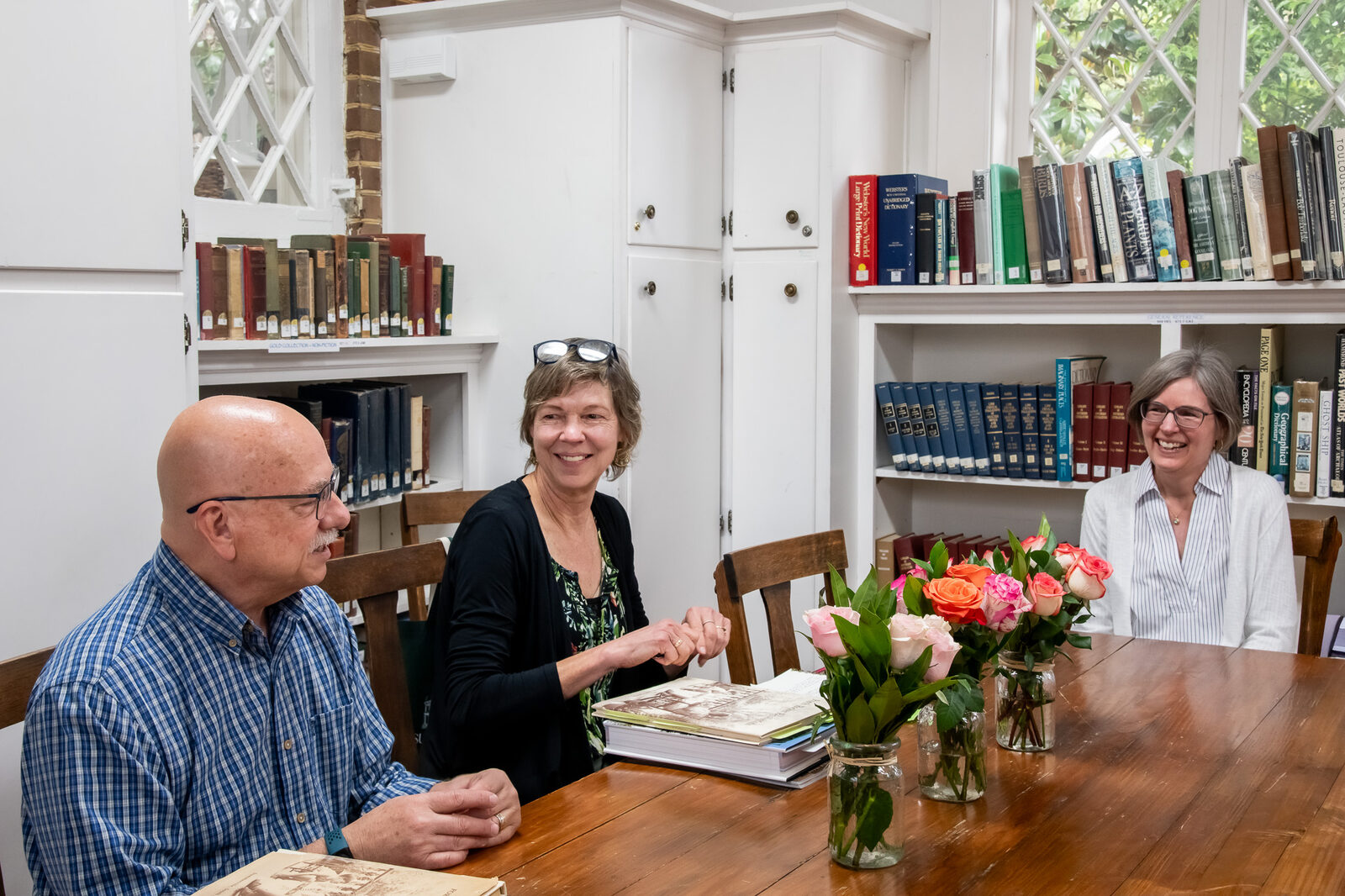
Nearly fifty years apart, two generations of Summervillians have felt the same impulse: gather the stories before they disappear. The town is larger now, the pace of change faster, but the instinct is the same one Peggy and Ginga felt in 1979 — that sense that if someone doesn’t write it down, it will be gone.
The Porch Rocker ladies have donated the remaining copies of their book — only a few hundred remain of the original 7,000 printed — to the Timrod Library, the very place where they celebrated the book’s release 46 years ago.
“Timrod Library gave us so much support for our book, even offering their hospitality for our first book-signing reception,” Peggy said. “All our children grew up going to the Timrod and signing their names in the book cards of an armload of checkouts. We are so glad to have a part in supporting them in turn and appreciate their making it possible to continue sharing Porch Rocker Recollections with more generations to come.”
Copies of Porch Rocker Recollections can be purchased at the Timrod for $40, with all proceeds supporting the library.
Meanwhile, Mike and Susan’s work on the new book continues. The project’s scope — 700 buildings spanning 150 years — means it cannot be completed by two people working alone in archives. The official records only go so far. What remains is scattered across attics, family albums and living memory. Which is why this book, from its earliest stages, has been conceived as a community effort.
Every old building in Summerville holds a story, even when the official records fall silent. Increasingly, those stories survive not in archives, but in family albums, porch conversations, unlabeled photographs and the memories of people who still remember who lived where, what stood before and how life once moved through these streets.
If you have old photos tucked under your bed or stored away in a family album, if you have something to share about the home you grew up in or the buildings that helped form the memories of your life here, we hope you’ll share them.
Sometimes the missing piece of history is sitting quietly in a hallway closet, tucked inside a scrapbook or carried in the memory of someone who simply hasn’t yet been asked. We’re asking.
Because ultimately, the story of Summerville belongs to all of us.