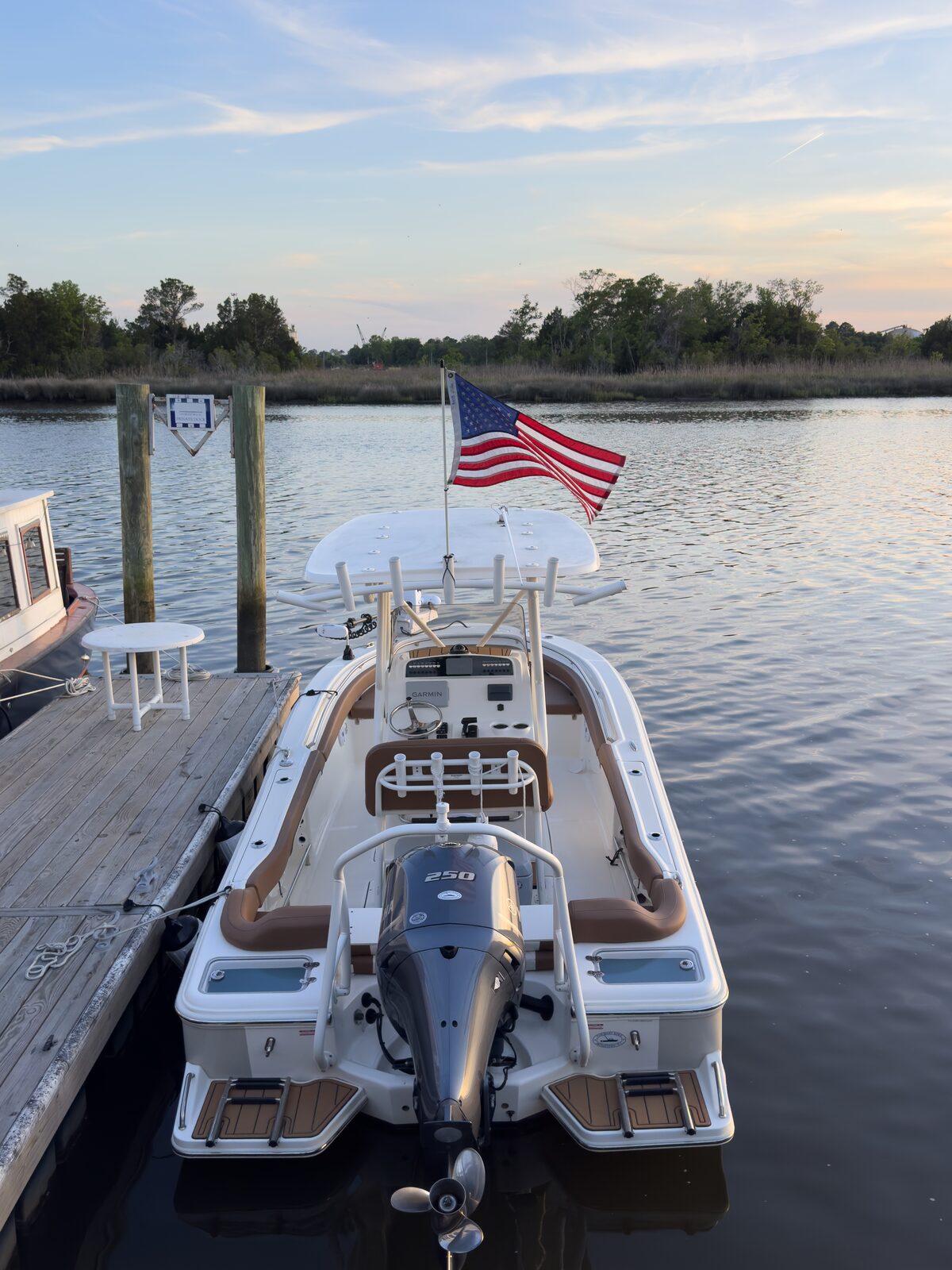
TRAVEL AND ADVENTURE
A Hammock Coast getaway, two hundred and fifty years in the making.
I left Summerville on a Friday morning, three days ahead of me and a tank of gas behind, with no particular agenda beyond the suggestion of a long weekend and a quiet question about what was still standing two hundred and fifty years after South Carolina helped midwife a country.
The Hammock Coast does not announce itself. There is no skyline, no boardwalk, no Ferris wheel turning above the dunes. There is, instead, a slow softening of the highway as it bends through pine and marsh, past tabby walls and roadside stands, and a kind of quiet that arrives — if you are paying attention — somewhere south of McClellanville.
This sixty-mile stretch of Georgetown County, set between Charleston and Myrtle Beach, has been many things in its long life: a colonial port, a rice empire, a Revolutionary battleground, a summer refuge. As the state marks its 250th year of American independence, the coast offers something rarer than commemoration. It offers continuity — the chance to walk through history without ever quite leaving the beach. It is also, conveniently, a long weekend from almost anywhere in the Lowcountry.
A proper visit moves the way the coast itself does — unhurriedly, in three acts. A morning among the live oaks of an old plantation. An afternoon and evening on a colonial waterfront. A second day spent on a barrier island that has perfected the art of doing very little, very well. What follows is less of an itinerary and more of a suggestion, really an invitation to go exploring and take the long way home.
Hopsewee
The first stop, a dozen miles south of Georgetown on Highway 17, is also the oldest. At Hopsewee Plantation, the house arrives the way good things often do: quietly, through the trees. Built around 1740 on a bluff above the North Santee River, the plantation is best known as the birthplace of Thomas Lynch Jr., who at twenty-six rode north to Philadelphia and signed the Declaration of Independence in his ill father’s place. Three years later, sailing for the West Indies in hopes of restoring his own failing health, he and his wife vanished at sea. The house, somehow, remained.
It is privately owned today by a husband-and-wife team who have devoted themselves to its preservation with the kind of attention that has more to do with love than livelihood. The result is a National Historic Landmark that feels less like a museum than a long, generous afternoon at someone’s home. Tours move through the original heart-pine rooms. A small on-site museum displays artifacts pulled from the soil. A thoughtful, recently expanded exhibit honors the lives of the enslaved men, women, and children who built and sustained Hopsewee for more than a century — a story the property’s stewards are visibly committed to telling well.
In the River Oak Cottage Tea Room, a glass of the house’s signature brew and a plate of chicken salad arrive without ceremony, which is to say with the kind of ceremony that matters most. The proprietor, on the day of this visit, was the sort of host who treats every guest as if the house’s continued existence were a small gift extended in their direction. Which, in a sense, it is.
Georgetown
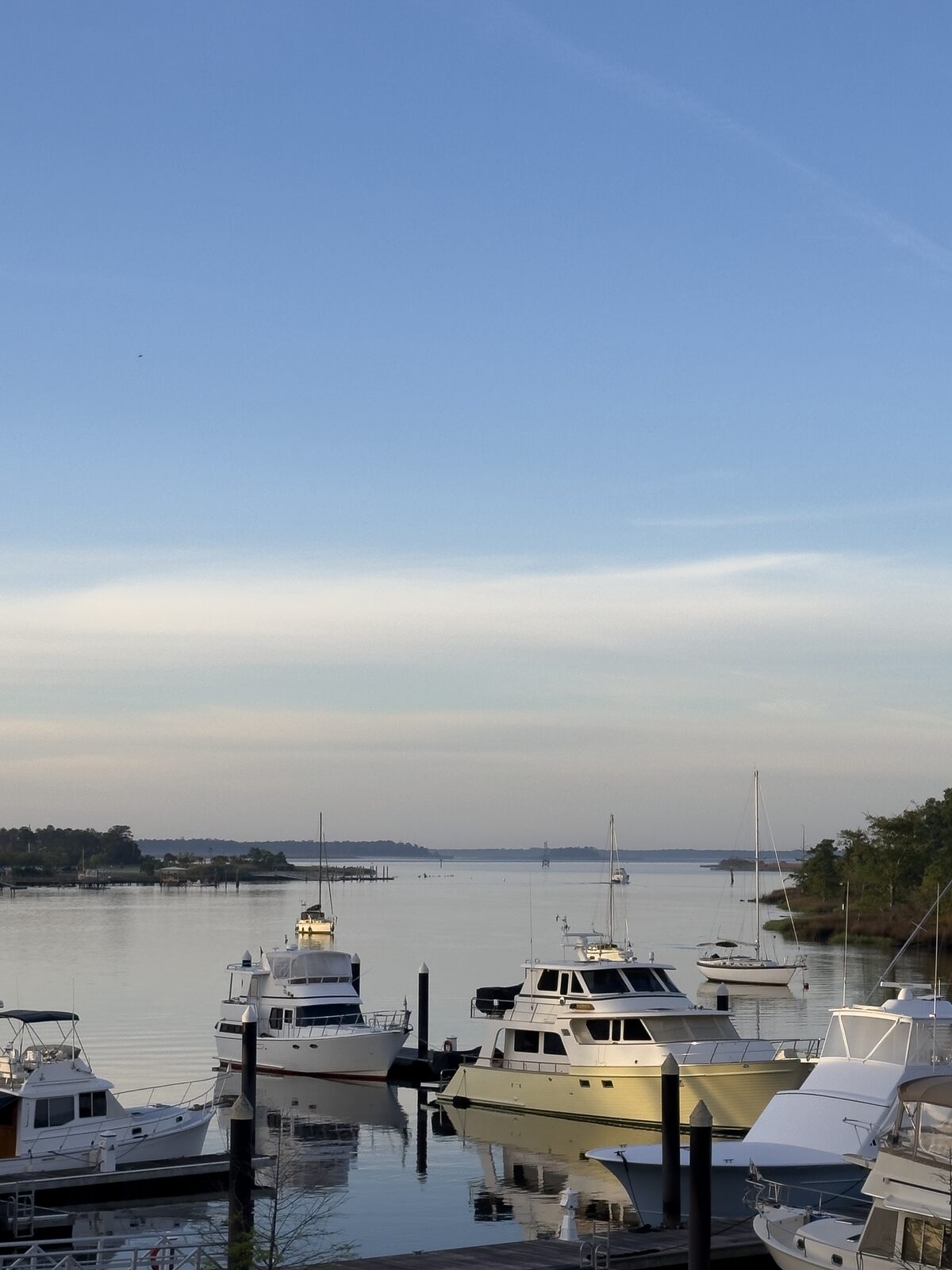
Forty minutes north, in Georgetown — founded in 1729 and the third-oldest city in South Carolina — history is the air. Indigo built the place; rice made it rich; the Revolution made it briefly inhospitable to its British occupiers, who held the town from July 1780 until Francis Marion and his ragged band of Lowcountry irregulars made staying inconvenient. By 1791, a victorious George Washington was personally thanking the heroes of that fight from the steps of the Masonic Lodge.
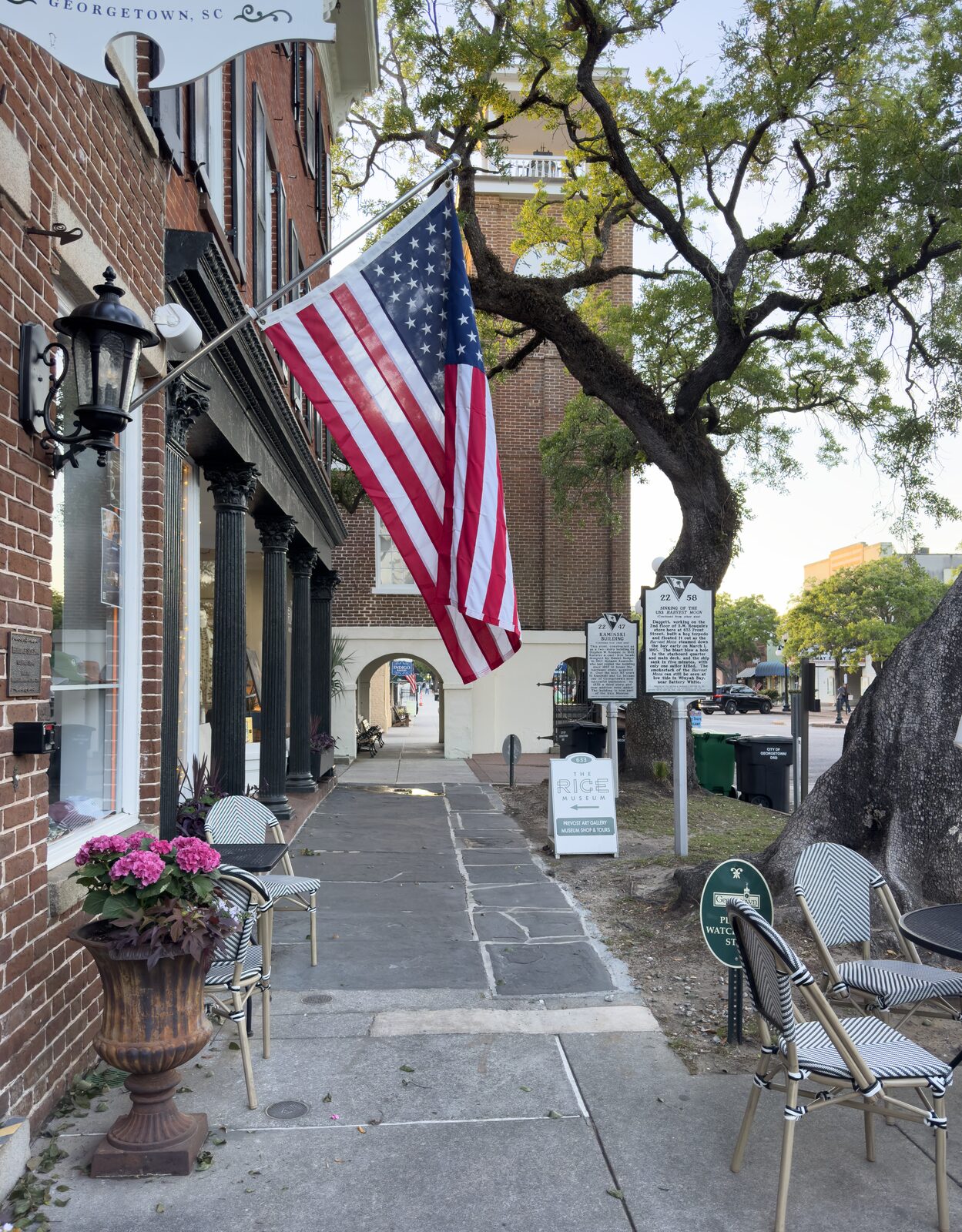
The Georgetown of today is a working waterfront and a four-by-eight grid of antebellum and colonial-era buildings, all walkable, all soaked in story.
At its center sits The George, a fifty-six-room boutique hotel that opened on Front Street in 2024 and became, almost overnight, the address. Forty-two of its rooms face the water. The interiors are coastal without veering into theme-park — oyster-shell whites, deep blues, custom artwork that nods to the marsh outside without leaning on it. The afternoon belongs to Eliza’s, the hotel’s open-air waterfront bar, where a spicy margarita and an offshore breeze do the work of resetting whatever needs resetting.
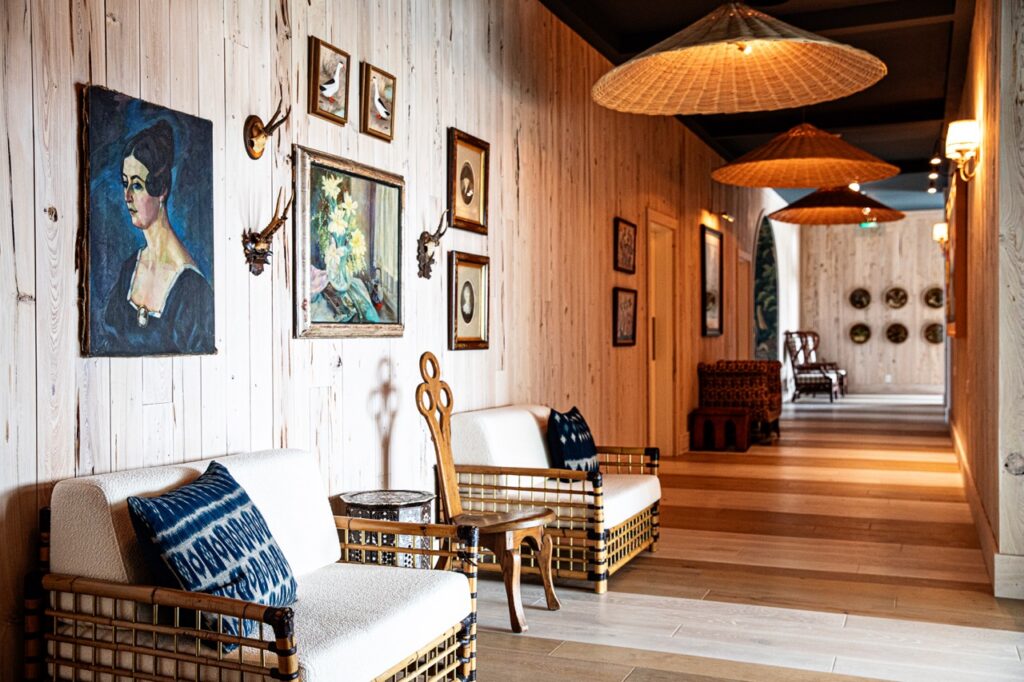
By dinner, The Independent — the hotel’s seafood-and-raw-bar restaurant, named for Georgetown’s old seafood market — is in full swing. The kitchen runs Southern and seasonal; the service runs warm. The food and the view conspire.
Pawleys
The next morning, the road bends down to Pawleys Island, and something shifts. The island has called itself “arrogantly shabby” for so long that the phrase has practically been notarized, but the truth beneath the slogan is simpler. Pawleys is widely cited as the oldest seaside resort on the East Coast, settled in the early 1700s by Lowcountry rice planters who removed their families to the barrier island each summer to escape the malarial inland marshes. The cottages they built are still here. So is the wind, and the salt, and the unhurried way that life on this strip of sand has always preferred to be lived.
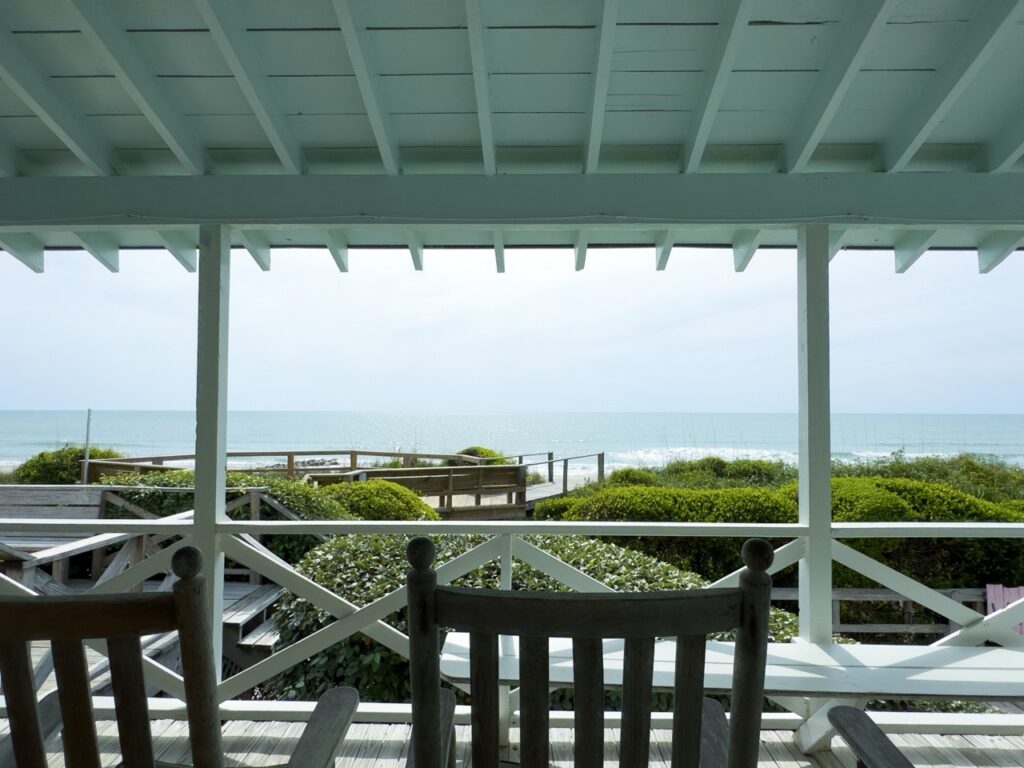
Among the island’s storied houses, the Sea View Inn occupies a category of its own. Built in 1937 by Celeste and Will Clinkscales, rebuilt after Hurricane Hazel leveled it in 1954, the Sea View remains exactly what it has always been: an oceanfront inn of twenty rooms, with a main house, scattered cottages, and a long back porch lined with rockers and the Atlantic. Cell phones are politely tucked away. Meals are served family-style in the dining hall. Guests return for the same week, in the same room, every year — sometimes for decades — which is to say the Sea View is less a hotel than an inheritance. To step onto its porch is to slip into the kind of beach memory most adults have stopped believing was still available. It does not advertise this effect. It does not have to.
The rest of the day arranges itself, as it tends to here. The Hammock Shops Village — founded in 1938 by the Lachicotte family on the back of the original 1889 Pawleys Island rope hammock — is good for an unhurried hour of browsing. Late morning, or any time at all, belongs to Anything Froz, where each acai bowl is blended to order and the owner is happy to talk. Dinner is the Rustic Table: upscale Southern, scratch kitchen, warm room. The kind of meal that confirms the day.
There is something to be said for a getaway that does not feel like a project. The Hammock Coast — close enough to Summerville to reach by lunchtime, far enough to feel like another country by sunset — has always rewarded the kind of traveler who arrives without an itinerary and leaves without a checklist. There is history here, and plenty of it: signed documents, occupied streets, summer cottages older than the republic. There are also quiet porches, slow dinners, and copious amounts of durable luxury.
Two hundred and fifty years ago, a young man rode out from Hopsewee and changed the shape of a country. The marsh he left behind is still there. The porch where he must have sat as a boy is still there. The coast, somehow, remains.
I drove south on Sunday with the windows down and the salt still in my hair, replaying the porch and the tea room and the live oaks. There are places that ask you to come back. The Hammock Coast does not ask. It simply waits. Go meet it.
The Long View — The Hammock Coast, two and a half centuries
- Early 1700s — Lowcountry rice planters begin moving their families each summer to the barrier island they call Pawleys, fleeing the malarial inland marshes. Many of those original raised cottages still stand.
- 1729 — Georgetown is laid out by Elisha Screven on a four-by-eight block grid. It becomes an official port of entry in 1732 — the third-oldest city in South Carolina, after Charleston and Beaufort.
- c. 1740 — Colonel Thomas Lynch establishes Hopsewee Plantation on a bluff above the North Santee River.
- 1749 — Thomas Lynch Jr. is born at Hopsewee.
- 1776 — Twenty-six-year-old Lynch Jr., having taken his ailing father’s seat in the Continental Congress, signs the Declaration of Independence on August 2.
- 1779 — Sailing for the West Indies in hopes of recovering his own failing health, Lynch Jr. and his wife vanish at sea.
- 1780–1781 — British forces occupy Georgetown from July to the following May, when Francis Marion — the “Swamp Fox” — and his Lowcountry irregulars make the town ungovernable.
- 1840 — The Georgetown district produces nearly half the rice crop of the United States and ships more rice than any port in the world.
- 1889 — A local riverboat captain designs the first Pawleys Island rope hammock — knotless, breathable, built to survive a Carolina August.
- 1937 — The Sea View Inn opens on Pawleys.
- 1938 — “Doc” Lachicotte and his wife Virginia open the original hammock shop, the seed of today’s Hammock Shops Village.
- 1972 — Hopsewee is named a National Historic Landmark.
The Stops
Hopsewee Plantation — 494 Hopsewee Road, Georgetown · (843) 546-7891 · hopsewee.com
Tour the circa-1740 birthplace of Declaration signer Thomas Lynch Jr., visit the on-site museum honoring the enslaved community, and stop into the River Oak Cottage Tea Room for chicken salad and the house brew. Open Tues–Sat; closed December and January.
The George Hotel — 615 Front Street, Georgetown · thegeorgehotelsc.com
A 56-room boutique hotel that opened in 2024 on Georgetown’s historic waterfront. Forty-two rooms face the water; everything downtown is a walk away.
Eliza’s — At The George Hotel
The hotel’s open-air waterfront bar. Order the spicy margarita; stay for the breeze.
The Independent — At The George Hotel · theindependentsc.com
Seafood-forward, raw bar, seasonal Southern. Named for Georgetown’s historic seafood market.
The Sea View Inn — 414 Myrtle Avenue, Pawleys Island · (843) 237-4253 · seaviewinn.net
Oceanfront inn since 1937. Twenty rooms, family-style meals, no phones at the table. Reservations book well in advance; tours by appointment for non-guests.
The Hammock Shops Village — 10880 Ocean Highway, Pawleys Island · hammockshops.com
Browse the original 1938 hammock shop and the village of independent boutiques that grew up around it.
Anything Froz — 13088 Ocean Highway, Pawleys Island
Made-to-order acai bowls, smoothies, fresh juice, espresso. Worth the stop on its own.
The Rustic Table — 10683 Ocean Highway, Pawleys Island · rustictable.com
Upscale Southern, scratch kitchen, warm room. Make a reservation.